The Ultimate Chengdu Attractions List: From Giant Pandas to Ancient Wonders – Your Complete Travel Guide
Welcome to Chengdu, a city often called Tianfu Zhi Guo (the Land of Plenty). Known for its laid-back lifestyle, bold spicy food, and deep cultural roots, this destination easily tops any chengdu attractions list. When people search for a reliable chengdu attractions list, they want places that balance nature, history, and local life—and this city delivers all three. Here, giant pandas roam in near-natural habitats, ancient civilizations come to life, and modern energy fills the streets.
If you’re planning a trip, this guide walks you through the very best places to visit, with practical tips to help you plan smoothly. Whether you’re building your own chengdu attractions list or simply curious about what makes this city special, you’ll find plenty of inspiration here.
Must-See Experiences Inside the City
These spots are all within the city center, easy to reach by subway, and fit nicely into a single day of exploration. Any solid chengdu attractions list should start with these iconic places.
🐼 Get Up Close with Giant Pandas
Chengdu Research Base of Giant Panda Breeding
This is arguably the number one reason many travelers build their chengdu attractions list. Nowhere else on earth offers such an intimate look at giant pandas across all ages—from tiny newborns to laid-back adults munching bamboo in spacious, natural enclosures. If luck is on your side, you may also spot the adorable red pandas. For anyone serious about their chengdu attractions list, this site is absolutely non-negotiable.
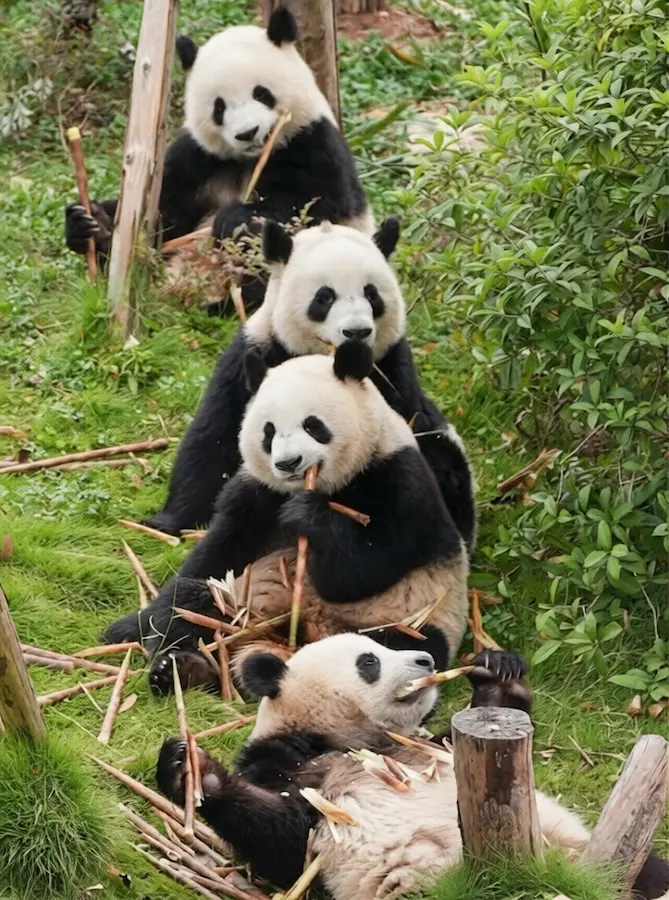
Address: 1375 Panda Avenue, Chenghua District
Ticket: 55 RMB (about $7.60 USD)
Tip: Pandas are most active in the morning. Arrive before 8:00 AM, or they’ll likely head indoors to nap. To see the celebrity panda Hua Hua, enter through the south gate and make a beeline right at opening time.
Getting there: Take Subway Line 3 to Panda Avenue Station, then hop on a shuttle or taxi.
🏛️ Dive into History and Culture
Chengdu Museum
If you want to understand the city beyond the usual chengdu attractions list, start here. This museum offers a rich look at 3,000 years of local history. Highlights include a lively Han Dynasty pottery figurine and a massive stone rhinoceros. The architecture itself is striking, and the exhibits are well-designed, making it easy to connect the past with the present.
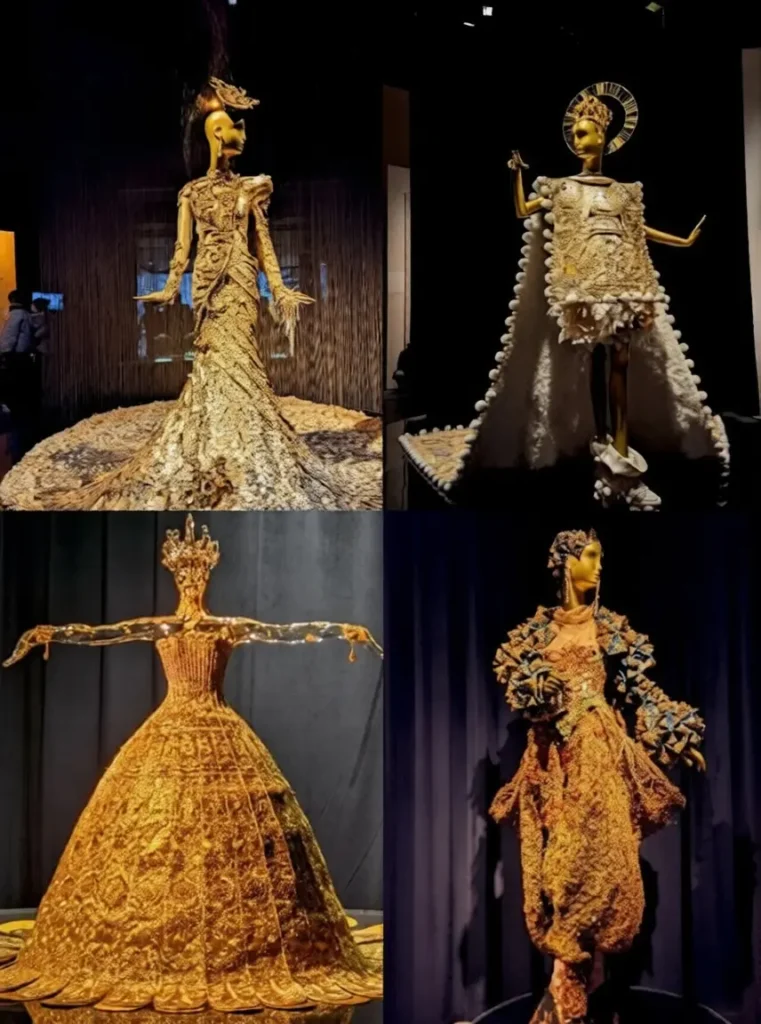
Address: 1 Xiaohe Street, Qingyang District
Ticket: Free, but online reservation is required. Closed on Mondays.
Getting there: Subway Line 1 or 2 to Tianfu Square Station.
Wuhou Shrine
This is the only temple in China dedicated to both a ruler (Liu Bei) and his subject (Zhuge Liang), two legendary figures from the Three Kingdoms period—a heroic era in Chinese history. Stroll through the grounds to see ancient steles and the famous red-wall-with-bamboo scene. History lovers will find this place deeply rewarding. Many visitors add it to their chengdu attractions list for its unique cultural significance.
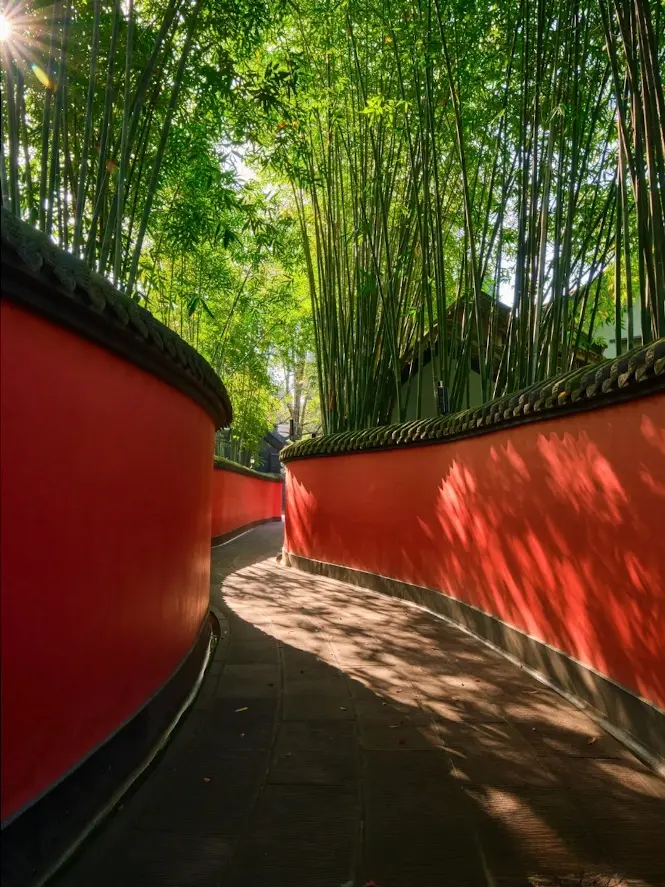
Address: 231 Wuhou Shrine Street, Wuhou District
Ticket: 50 RMB (about $6.90 USD)
Time needed: 2–3 hours
Getting there: Subway Line 3 or 5 to Gaoshengqiao Station.
Du Fu Thatched Cottage
This peaceful garden was once home to Du Fu, one of China’s greatest poets. Walk through the reconstructed thatched house and feel the quiet inspiration behind his famous line about wishing “a thousand great mansions” to shelter the poor. A calm spot for a reflective stroll. For a more complete chengdu attractions list, this cultural gem is a must.
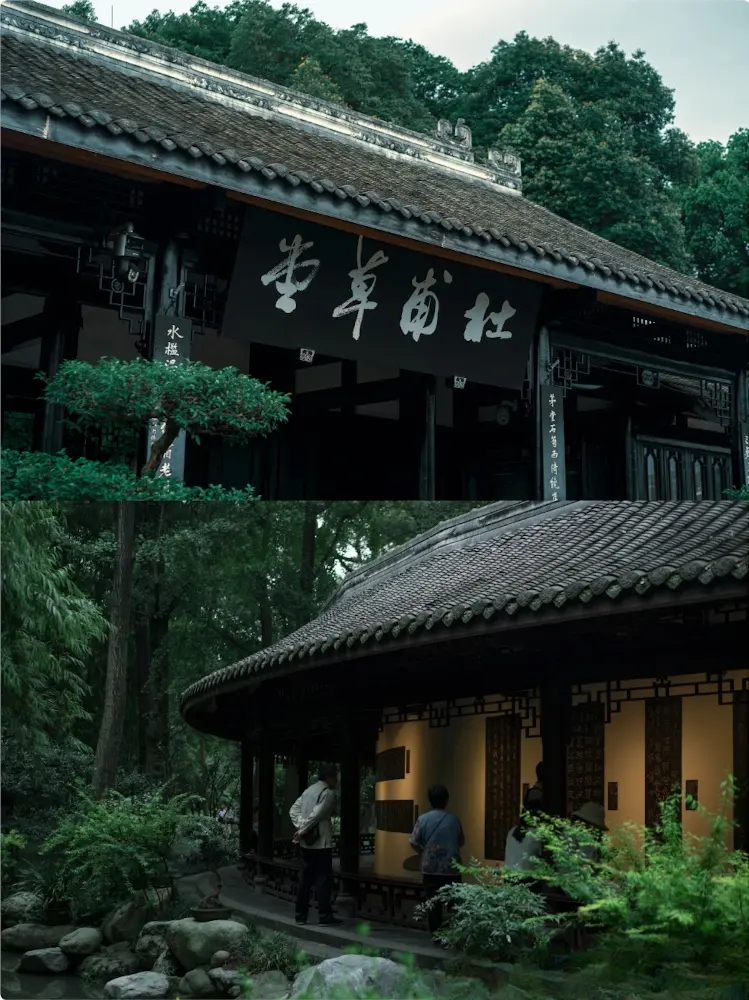
Address: 37 Qinghua Road, Qingyang District
Ticket: 50 RMB (about $6.90 USD)
Getting there: Subway Line 4 to Caotang North Road Station.
Jinsha Site Museum
Built directly over an archaeological site, this museum offers a fascinating window into the ancient Shu kingdom from 3,000 years ago. The highlight is the golden Sun and Immortal Birds ornament, now a symbol of China’s cultural heritage. Seeing it in person is unforgettable. No chengdu attractions list would be complete without this extraordinary archaeological site.
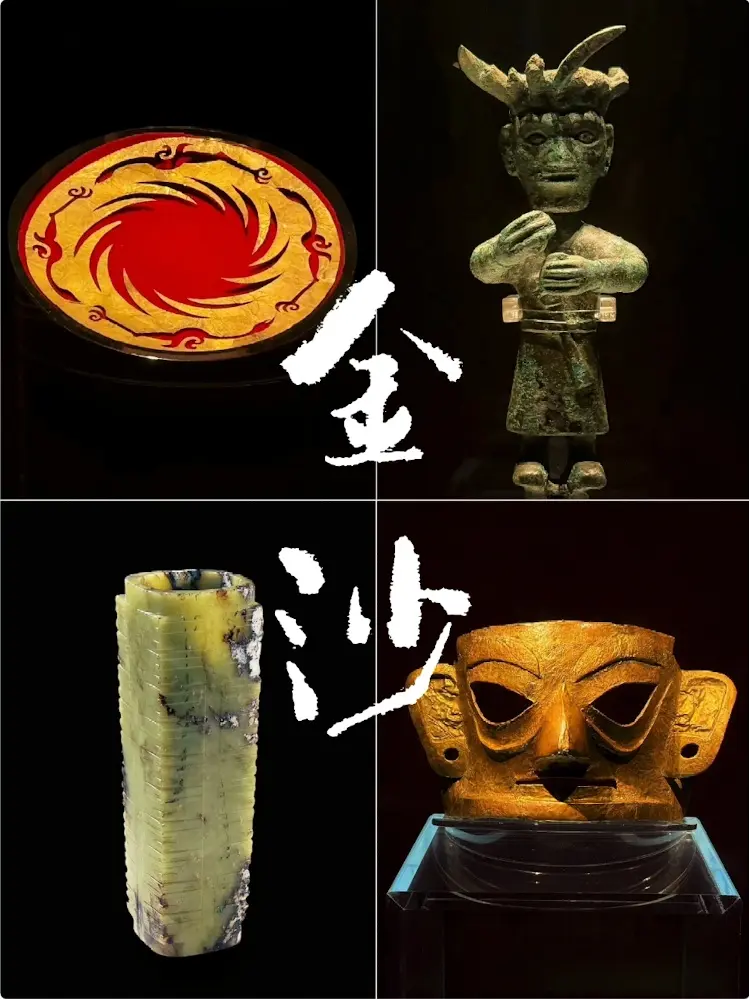
Address: 2 Jinsha Site Road, Qingyang District
Ticket: 50–80 RMB (about $6.90–11.10 USD)
Getting there: Subway Line 7 to Jinsha Museum Station.
🍃 Experience Chengdu’s Easygoing Side
People’s Park
This park captures the soul of local life. Head straight to Heming Tea House, order a gaiwan (covered teacup), and settle in. You’ll see seniors playing mahjong, friends chatting, and even street musicians. For a unique treat, try ear cleaning (ca’er)—an oddly satisfying local tradition.
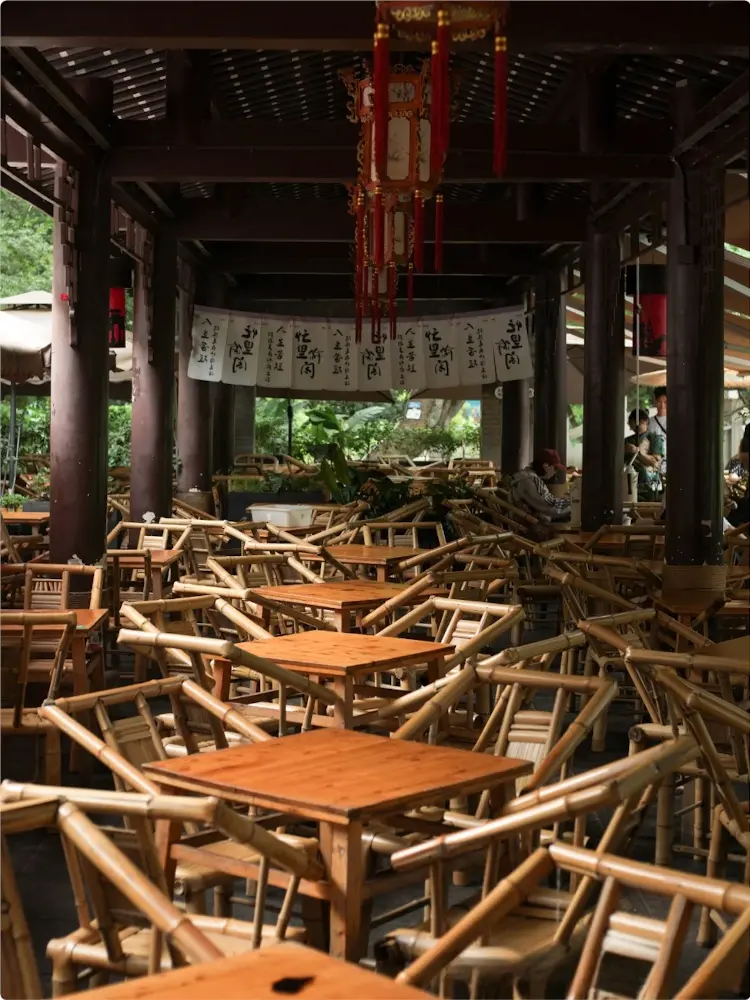
Address: 12 Shaocheng Road, Qingyang District
Ticket: Free. Tea starts at about 20 RMB (around $2.80 USD).
Getting there: Subway Line 2 to People’s Park Station.
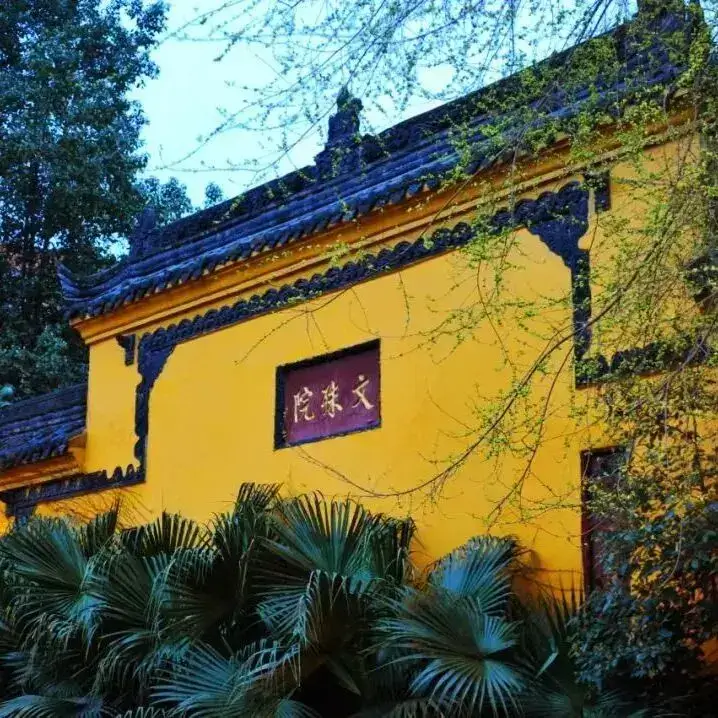
Wenshu Monastery
A bustling Buddhist temple tucked right in the city. Walk through red gates and quiet courtyards, then enjoy a simple vegetarian meal inside the monastery. It’s a refreshing escape from the busy streets just outside.
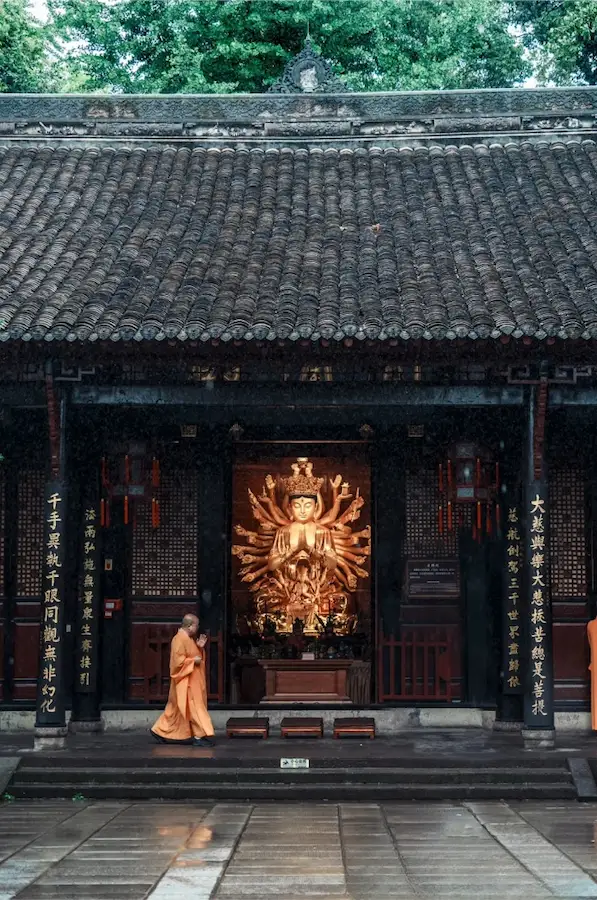
Address: 66 Wenshuyuan Street, Qingyang District
Ticket: Free
Getting there: Subway Line 1 to Wenshu Monastery Station.
✨ Modern Meets Traditional
Kuanzhai Alley
This area is made up of three parallel alleys—Kuan (Wide), Zhai (Narrow), and Jing (Well)—lined with Qing Dynasty-style buildings. It’s a great place to wander, take photos, and browse local shops.
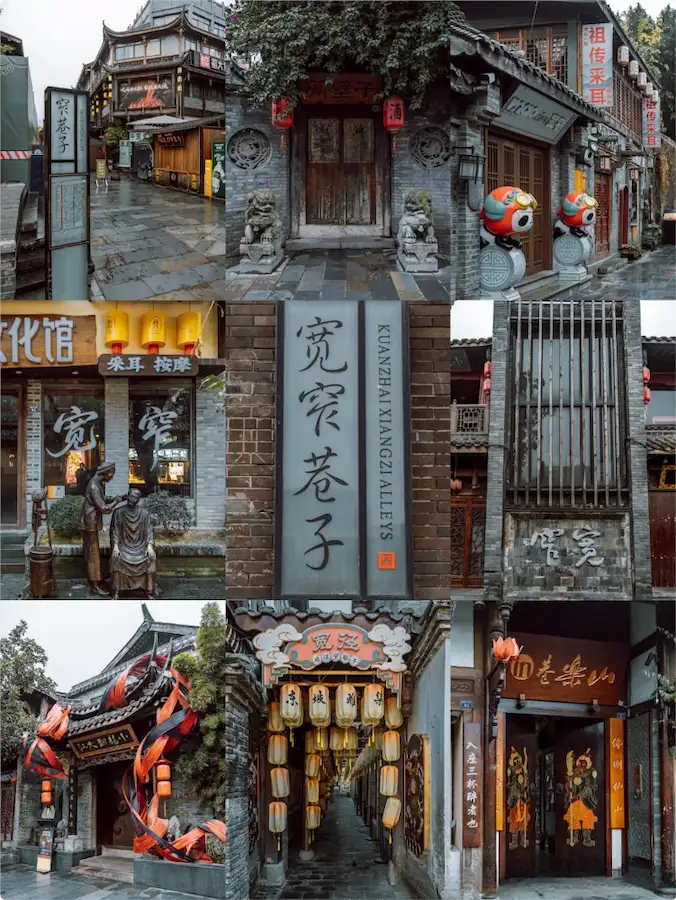
Practical tip: While the atmosphere is fun, food and souvenirs here tend to be overpriced. Instead, walk five minutes to Kuixinglou Street, a local favorite for authentic eats. For more insights on local experiences, check out what to do in chengdu for additional ideas beyond the main sights.
Ticket: Free
Jinli Ancient Street
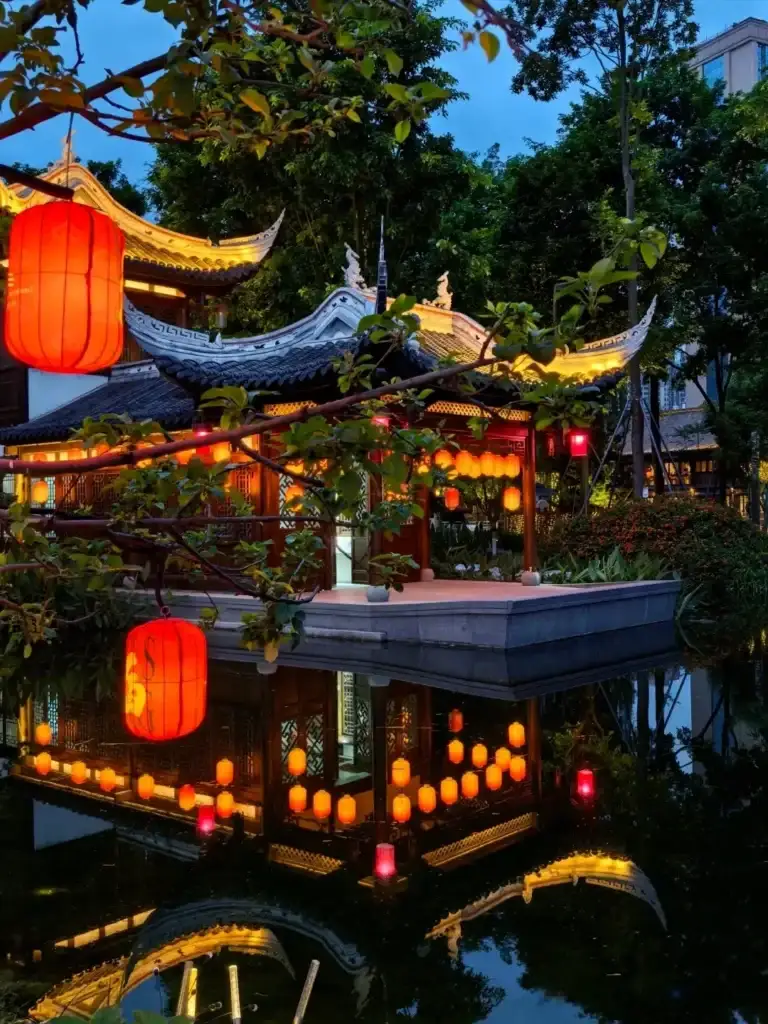
Right next to Wuhou Shrine, this pedestrian street glows with red lanterns at night. Sample street food like sanda pao (three cannonballs) and bo bo ji (skewers in chili oil), or catch a Sichuan opera face-changing performance.
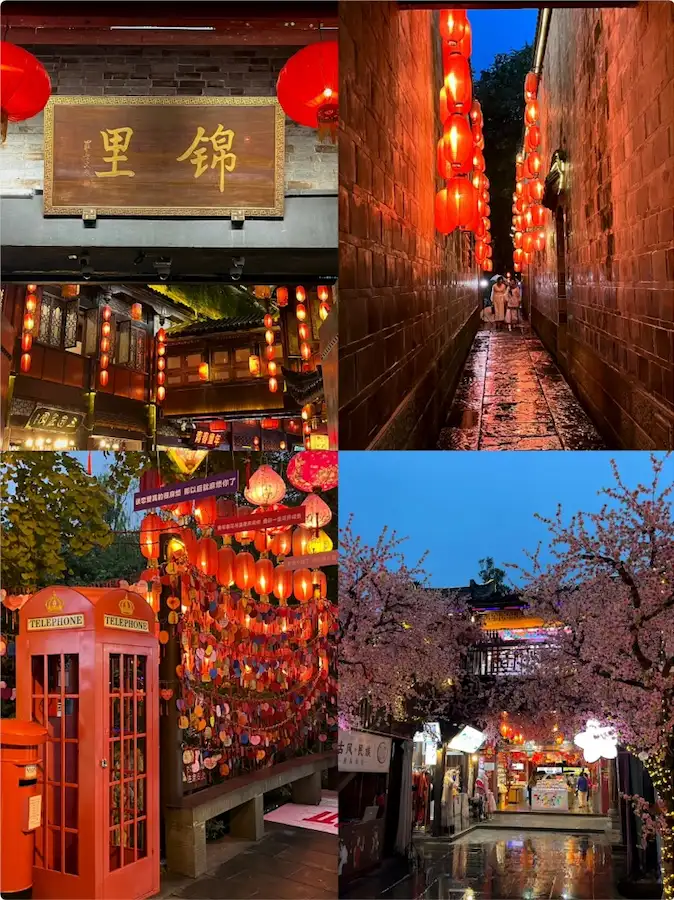
Practical tip: Like Kuanzhai Alley, it’s tourist-oriented—enjoy the vibe without eating too much here.
Ticket: Free
Chunxi Road & Taikoo Li
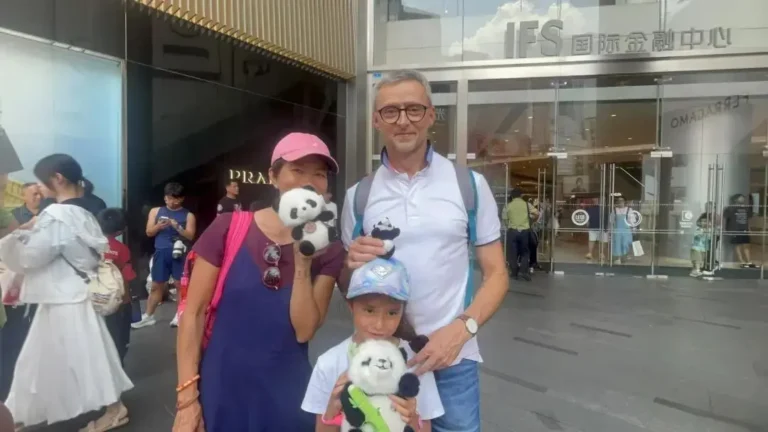
This is Chengdu’s buzzing commercial heart. Chunxi Road is the classic pedestrian street, home to the giant climbing panda sculpture at IFS—go up to the 7th floor for a face-to-face photo. Taikoo Li blends open-air luxury shopping with the ancient Daci Temple, and the huge 3D screen nearby is a crowd-pleaser.
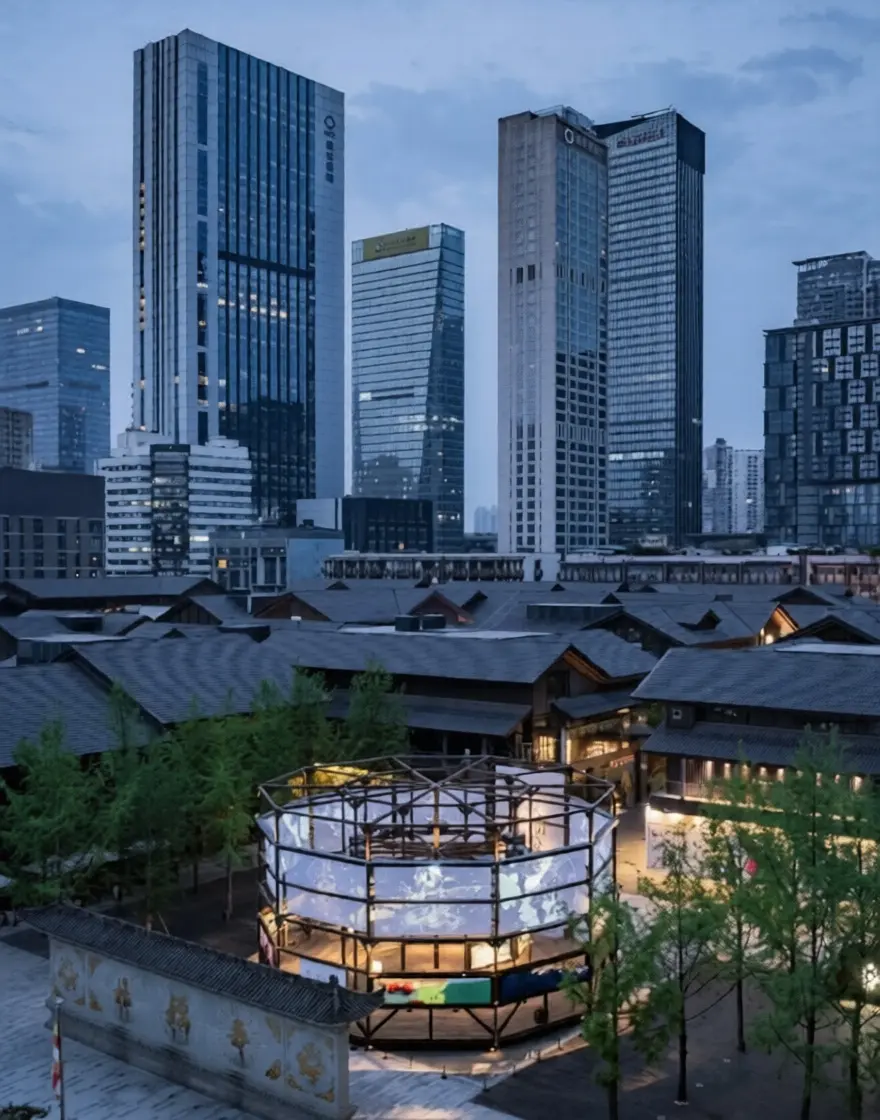
Ticket: Free
🎨 Other Distinctive Neighborhoods
Eastern Suburb Memory: A creative park built from old factory buildings. Great for photos with brick chimneys, train cars, and colorful murals.
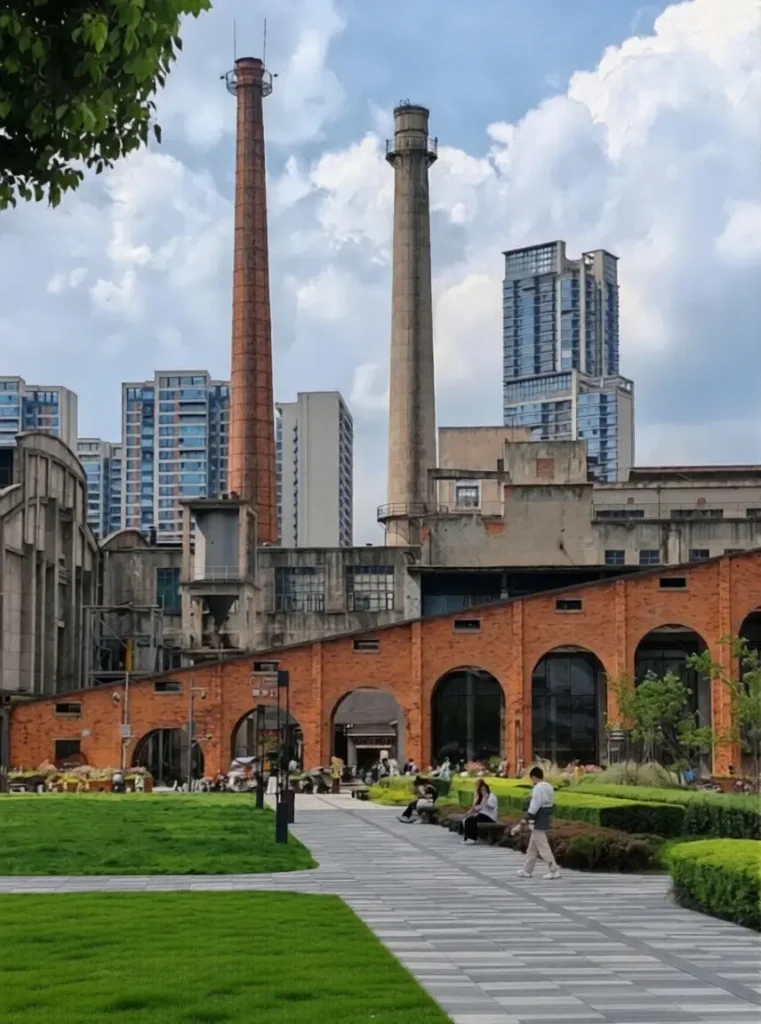
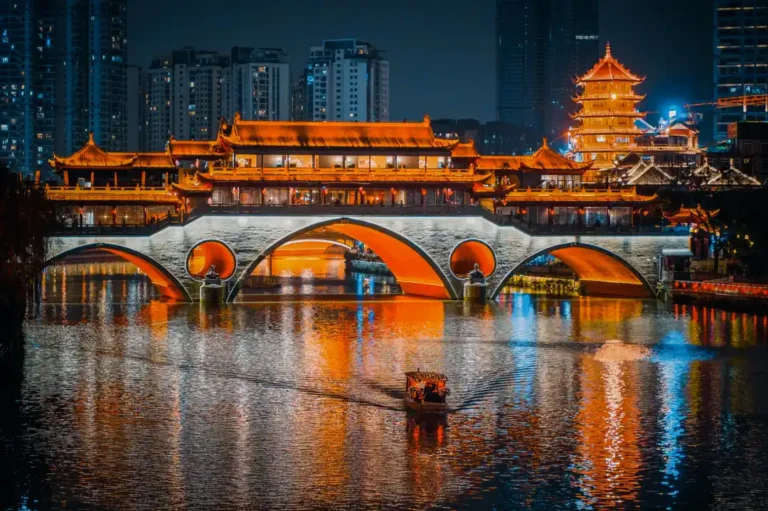
Jiuyan Bridge: The go-to nightlife area. The lantern-lit Anshun Bridge reflects beautifully on the river. Pick a bar along the water for live music and a gentle breeze.
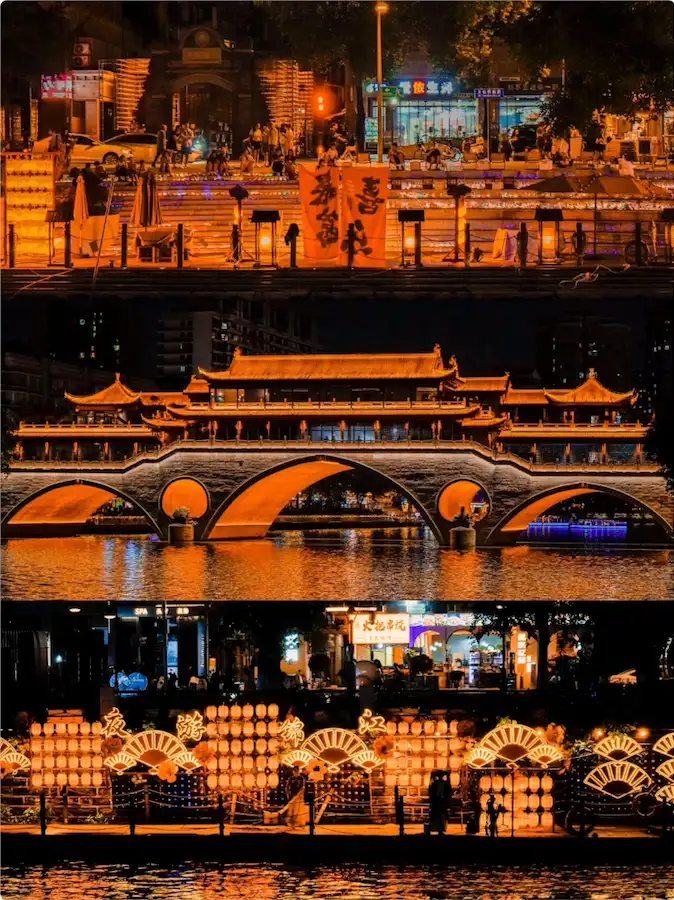
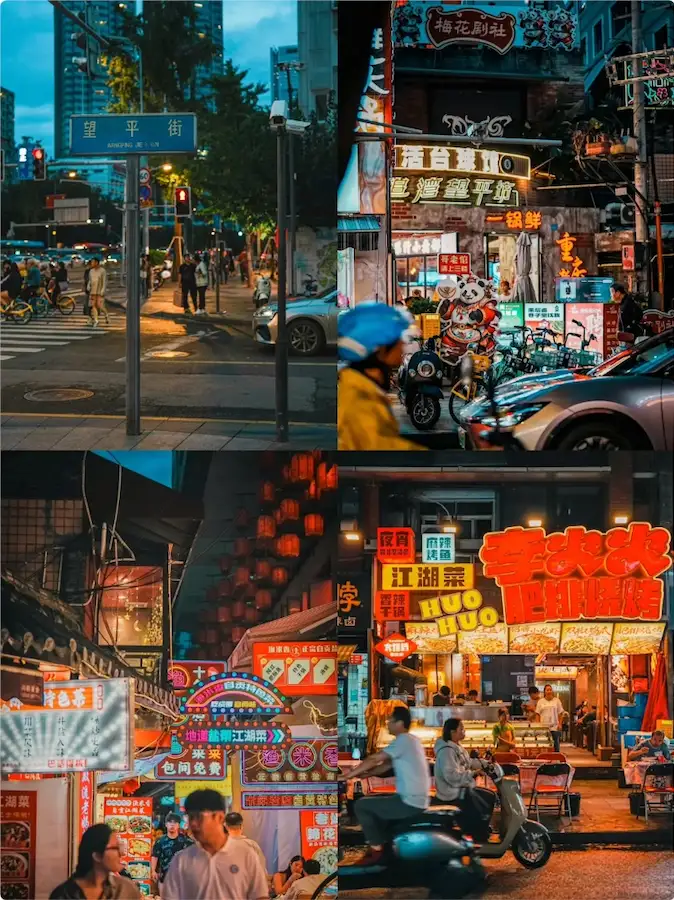
Wangping Street: A laid-back riverside strip filled with indie coffee shops and boutiques. Perfect for a chill afternoon.
Exploring World Heritage Sites Around Chengdu
Beyond the city, a few iconic sites deserve a spot on your chengdu attractions list. For a broader overview of must-see destinations, you can also explore chengdu china attractions to compare and plan your itinerary.
Dujiangyan Irrigation System
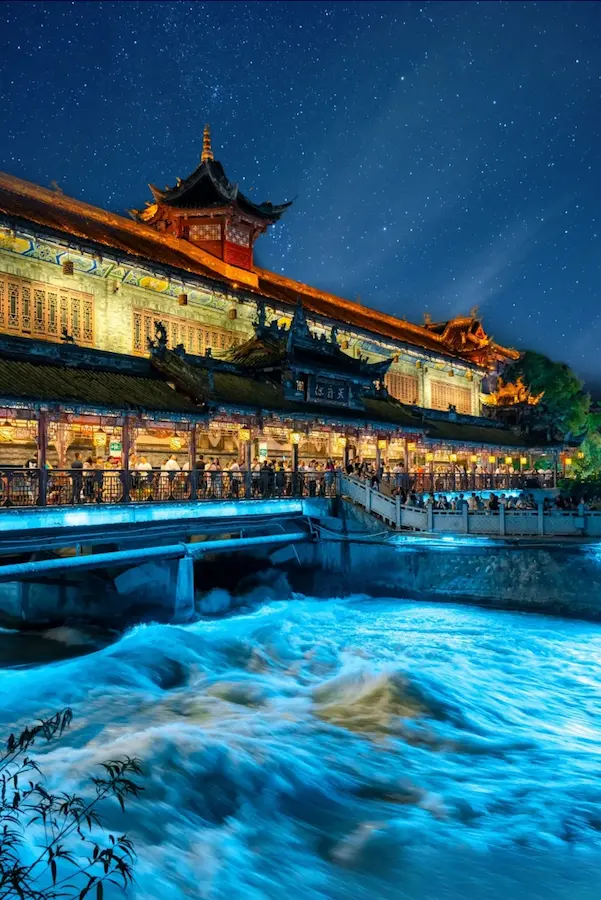
This 2,000-year-old marvel still functions today, directing water from the Min River to the fertile plains. The three key features—Fish Mouth, Flying Sand Weir, and Bottle Neck—showcase ancient engineering brilliance. The setting is scenic too, with mountains and rivers all around.
Location: Dujiangyan City
Ticket: 80 RMB (about $11.10 USD)
Getting there: Take a high-speed train from Xipu Station to Liduigongyuan Station (about 23 minutes). Walk straight to the site.
Hidden gem: At dusk, stroll to Nanqiao Bridge just outside the entrance to see the famous “Blue Tears”—lights reflecting on the river, creating a magical glow.
Mount Qingcheng
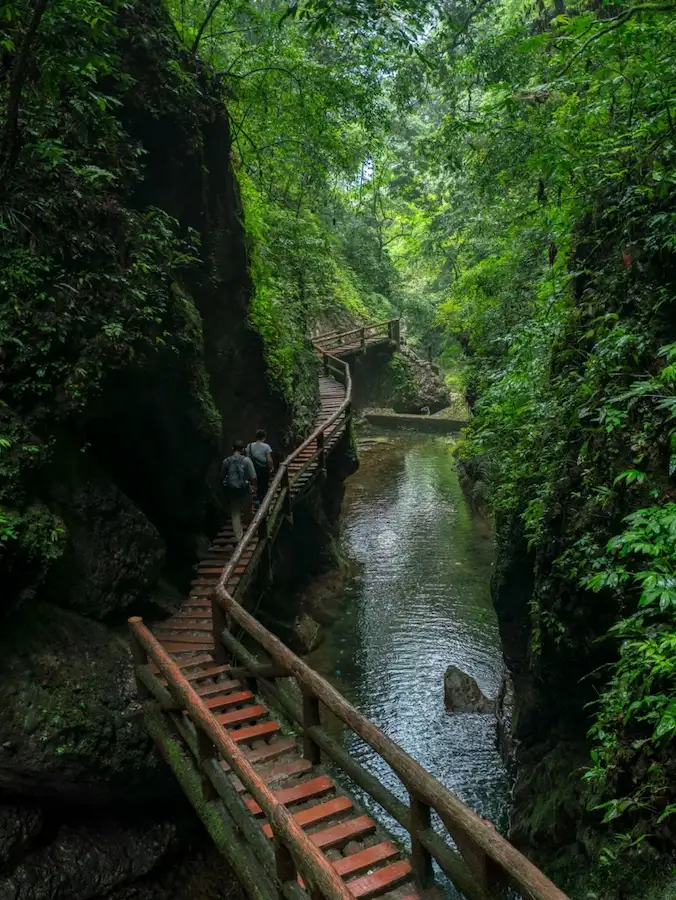
Known as the birthplace of Taoism, this mountain is famous for its peaceful, lush atmosphere. The front section is rich with Taoist temples and historical sites; the back section offers waterfalls and forest trails—ideal for nature lovers.
Location: Dujiangyan City
Ticket: Front mountain 80 RMB (about $11.10 USD); back mountain 20 RMB (about $2.80 USD)
Getting there: High-speed train from Xipu Station to Qingchengshan Station (about 30 minutes), then a short bus or taxi ride.
Sanxingdui Museum (Guanghan City)
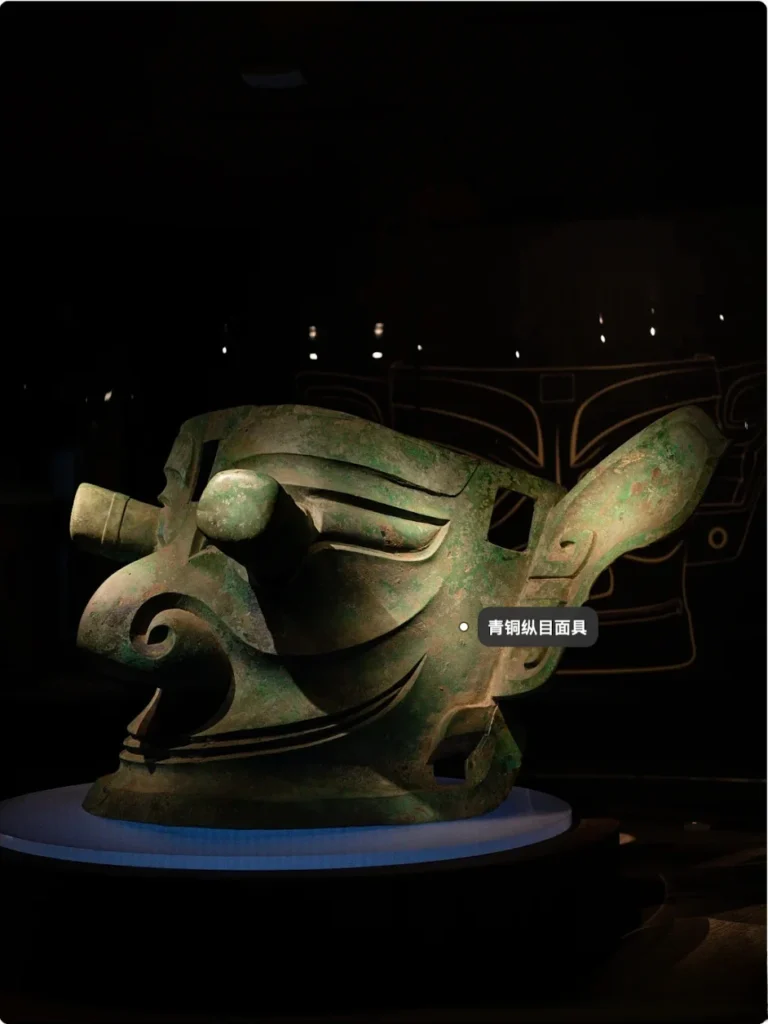
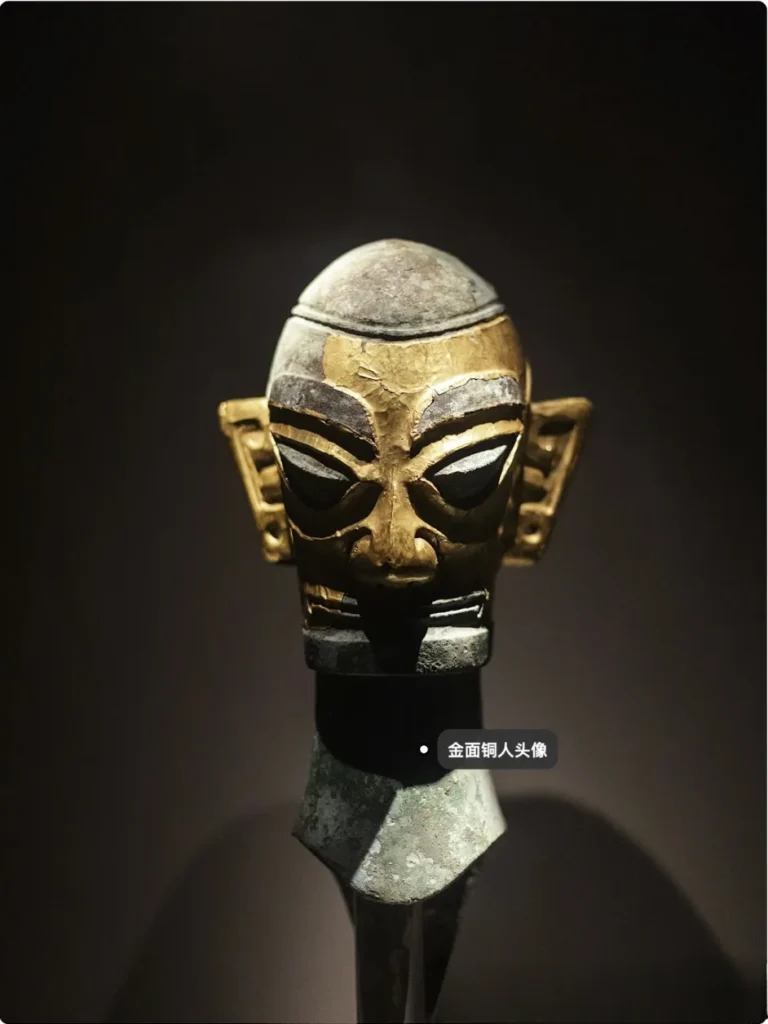
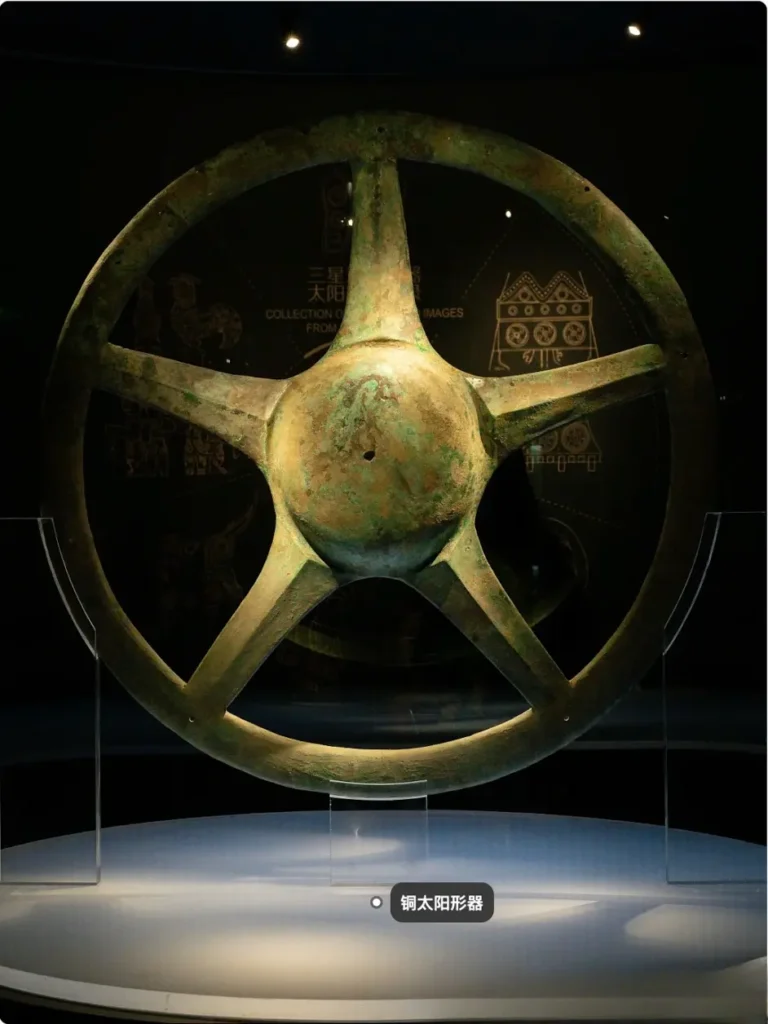
This museum reveals a lost civilization unlike anything in central China. The bronze masks, sacred tree, and golden scepter feel almost otherworldly. A must for anyone curious about ancient mysteries.
Ticket: 70–80 RMB (about $9.70–11.10 USD)
Getting there: Take a high-speed train from Chengdu East Station to Guanghan North (about 20 minutes), then taxi or bus to the museum. Plan a full day.
Mount Emei & Leshan Giant Buddha (Leshan City)
The Leshan Giant Buddha is a 71-meter stone statue carved into a cliff. The best view is from a boat on the river. Mount Emei, one of China’s four sacred Buddhist mountains, offers stunning sunrise views from the Golden Summit along with a towering gilded statue of Samantabhadra.
Suggested: These two sites are best done over two days. For families or those short on time, take a boat for the Buddha and a cable car up Mount Emei.
Getting there: High-speed trains from Chengdu to Leshan (about 1.5 hours).
Jiuzhaigou Valley
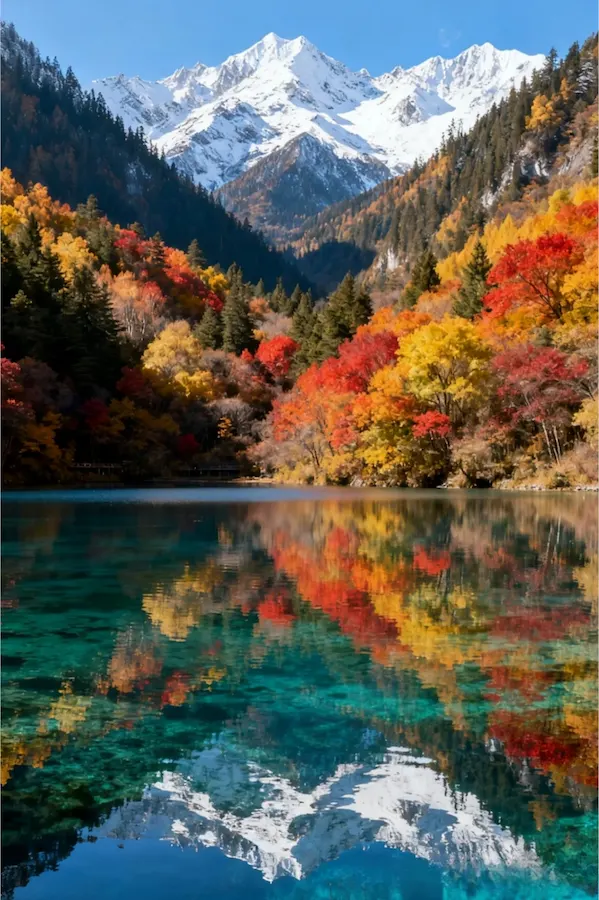
A UNESCO World Heritage site known as a fairyland of turquoise lakes, waterfalls, and snow-capped peaks. The colors of the water here are simply surreal.
Getting there: A high-speed train now runs from Chengdu East to Huanglongjiuzhai Station (about 2 hours), followed by a bus to the park entrance. Plan at least two days. Consider joining a small group tour for convenience.
Sample Itineraries
3-Day Classic Tour
Day 1: Panda Base (morning) → Wenshu Monastery (afternoon) → Kuanzhai Alley (evening photos) → Kuixinglou Street (dinner)
Day 2: Dujiangyan (day trip by high-speed train) → Nanqiao Bridge for “Blue Tears” (evening) → Return to Chengdu
Day 3: People’s Park (morning tea) → Chengdu Museum (noon) → Taikoo Li / Chunxi Road (afternoon shopping and panda photo) → Jiuyan Bridge (night views)
5-Day Deep Dive
Days 1–3: Follow the 3-day plan but at a relaxed pace.
Day 4: Wuhou Shrine → Jinli Ancient Street (evening) → Sichuan opera face-changing show
Day 5: Mount Qingcheng day trip OR Jinsha Museum + Du Fu Thatched Cottage
Extended Highlights
2 days: Mount Emei + Leshan Giant Buddha (overnight in Leshan)
3–4 days: Jiuzhaigou + Huanglong
Practical Tips
Where to Stay
You don’t have to stay in Chunxi Road—it’s crowded and pricey. Instead, look near subway Lines 2 or 3, like around Niuwangmiao or Dongmen Bridge. You’ll save money and still be well-connected. If you’re unsure where to base yourself, this guide on best area to stay in chengdu for first timers offers helpful neighborhood insights.
Getting Around
Chengdu’s subway system has 19 lines and covers most attractions. High-speed trains are the best way to reach places like Dujiangyan, Qingchengshan, and Leshan. Use the Tianfu Tong app or mobile payment for easy access. For comprehensive travel resources, chengdu travel provides useful updates and planning tools.
Food Guide
Must-try: Hot pot, chuanchuan (skewers), dan dan noodles, fuqi feipian (beef slices), long chaoshou (wontons), bo bo ji, danhonggao (egg waffles), bingfen (sweet jelly). If you’re curious about the local food scene, this detailed page on what is chengdu famous for food covers all the must-try dishes.
Where locals eat: Skip the overpriced snacks at Kuanzhai Alley and Jinli. Head to Kuixinglou Street, Wangping Street, or small cangying guanzi (hole-in-the-wall eateries) in residential areas for the real deal.
Hot pot warning: If you’re not used to spicy food, order wei la (mild) and emphasize wàidì rén, shǎo là—“I’m a foreigner, less spice.” Chengdu’s mild can still be fiery.
Important Reminders
Bring your passport. Many museums require online reservations and entry with ID.
Get to the panda base early—no exceptions.
Carry an umbrella. Rain can come suddenly.
Ignore touts offering “fast-track” or “private guides.” They’re not official.
Chengdu’s beauty lies in its lifestyle. Don’t just rush from sight to sight. Find a tea house, sit back, and let the city’s easy rhythm sink in. That’s the moment you’ll remember long after you’ve left.
This guide can become your real trip
Instead of spending hours piecing everything together, let me and our team build the perfect Chengdu itinerary for you — complete with panda visits, hot pot dinners, and the best local tea houses.
📋 Plan My Chengdu Trip