Discover Qingyang Palace Chengdu: A Peaceful Taoist Escape in the Bustling City
- Quick Facts: Your First Glance at Qingyang Palace Chengdu
- The Story Behind Qingyang Palace Chengdu
- What to See: Walking Through Qingyang Palace Chengdu
- Experiences: What to Do at Qingyang Palace Chengdu
- Where to Eat: Food Near Qingyang Palace Chengdu
- Beyond the Walls: Exploring Around Qingyang Palace Chengdu
- Getting to Qingyang Palace Chengdu
- Where to Stay
- Sample Itineraries
- Visitor Tips: Doing It Right
- Photography Tips for Qingyang Palace Chengdu
- Practicalities at Qingyang Palace Chengdu
Hidden in plain sight along busy First Ring Road, Qingyang Palace Chengdu offers something rare—a quiet moment of ancient spirituality just steps from the metro. Locals call Qingyang Palace Chengdu the “Number One Taoist Temple in Western Sichuan.” For visitors, it’s a chance to step back over 2,000 years into history without leaving the city center. Come watch monks in grey robes sweep fallen ginkgo leaves, touch a 300-year-old bronze goat for good luck, and sip tea under trees that have witnessed dynasties rise and fall. A visit to Qingyang Palace Chengdu isn’t just another temple tour—it’s a doorway into the city’s soul. For more inspiration, check out our complete chengdu travel guide.
Quick Facts: Your First Glance at Qingyang Palace Chengdu
What it is: The oldest and largest Taoist temple in the downtown area—a living piece of spiritual history. Qingyang Palace Chengdu has welcomed visitors for centuries.
Best times to visit:
Year-round: Qingyang Palace Chengdu welcomes you any season
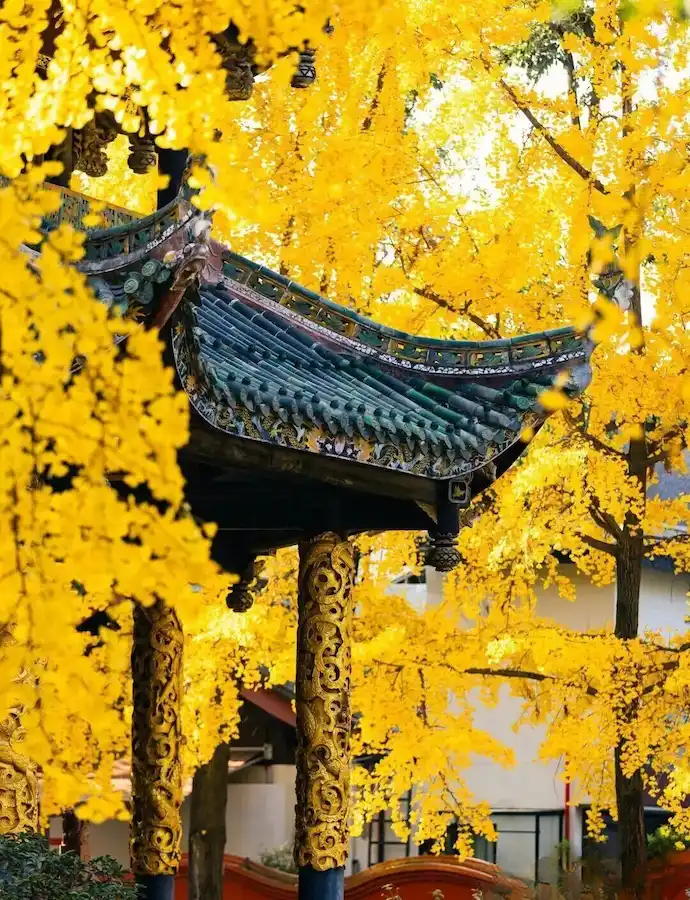
Autumn (November): Ancient buildings frame golden ginkgo trees—pure magic
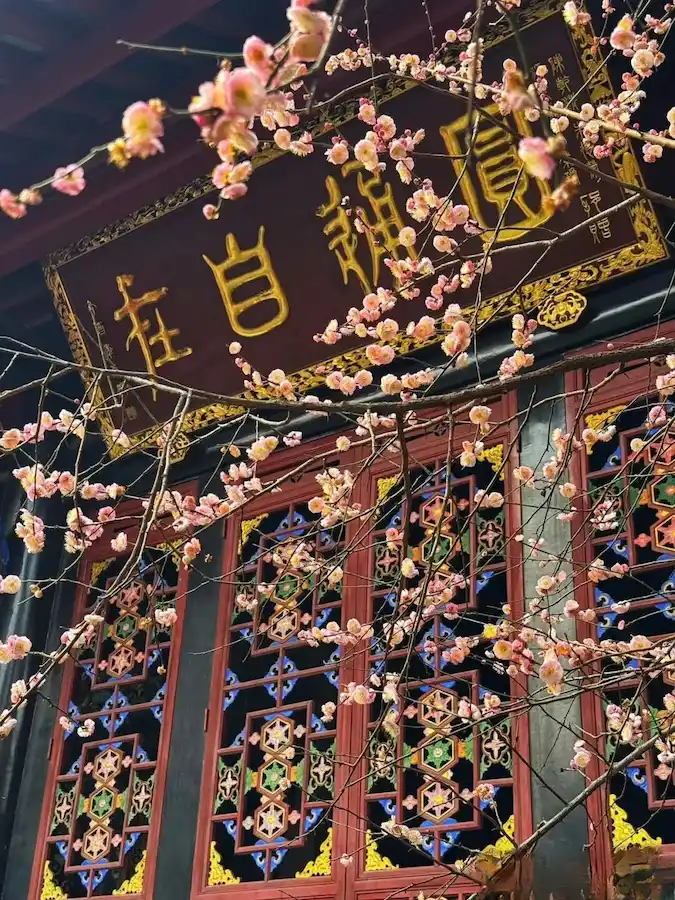
Winter (January-February): Pink plum blossoms bloom quietly, their scent filling the cool air
Spring (Lunar February 15th): The massive temple fair at Qingyang Palace Chengdu spills into nearby Culture Park—local food, performances, and happy crowds
How long to stay:
1 hour: A quick walk-through hits the highlights of Qingyang Palace Chengdu
2-3 hours: The sweet spot—time to explore, photograph, and actually relax in the tea garden
Open hours:
Peak (May-October): 8:00 AM – 6:00 PM (last entry 5:30 PM)
Off-peak (November-April): 8:00 AM – 5:30 PM (last ticket 5:20 PM)
Ticket prices:
Adults: ¥10 ($1.40 USD)
Students: ¥5 ($0.70 USD) with valid ID
Free entry: Kids under 1.2m, seniors 65+, active/retired military, disabled visitors, Taoist priests with certificates, journalists (with credentials)
Address: No. 9, Section 2, West First Ring Road, Qingyang District, Chengdu
The Story Behind Qingyang Palace Chengdu
A Legend Born 2,500 Years Ago
The story of Qingyang Palace Chengdu starts with a promise. According to Western Han scholar Yang Xiong’s writings, the great sage Laozi—after finishing the Tao Te Ching—told his disciple Yin Xi: “Once you’ve practiced the Way for a thousand days, come find me at the Qingyang Fair in Chengdu.”
A thousand days passed. Yin Xi arrived. And there, legend says, Laozi appeared, riding a green ox, to reveal deeper truths. That’s why Qingyang Palace Chengdu is considered the original place where Laozi taught in Sichuan—the very root source of Taoist teaching in this region. Many pilgrims visit Qingyang Palace Chengdu specifically for this sacred connection.
When Emperors Came to Stay
Qingyang Palace Chengdu owes its name—and much of its glory—to two Tang Dynasty emperors on the run.
In 755 AD, Emperor Xuanzong fled the An Lushan rebellion and took shelter here. Over a century later, in 881 AD, Emperor Xizong also escaped chaos by seeking refuge at this very temple. He stayed four years at what would become Qingyang Palace Chengdu.
Legend says during his stay, a jade brick mysteriously appeared from the ground, inscribed with characters foretelling peace. Grateful, Emperor Xizong poured funds into expanding the temple and issued an imperial decree: from then on, it would be called “Qingyang Gong” (Palace), not just “Guan” (Temple). That one character elevated Qingyang Palace Chengdu to imperial status—a rare honor. If you’re interested in more historical sites, consider visiting mount qingcheng from chengdu, another important Taoist mountain.
What You See Today
The Tang Dynasty buildings didn’t survive the Ming Dynasty’s wars and fires. What stands at Qingyang Palace Chengdu now was mostly rebuilt between 1667 and 1671, during early Qing Dynasty. In 1983, the Chinese government designated Qingyang Palace Chengdu a key national Taoist temple—official recognition of its enduring importance.
What to See: Walking Through Qingyang Palace Chengdu
The layout of Qingyang Palace Chengdu follows a straight line. Just walk forward—each hall leads naturally to the next.
① Mountain Gate and Lingzu Hall
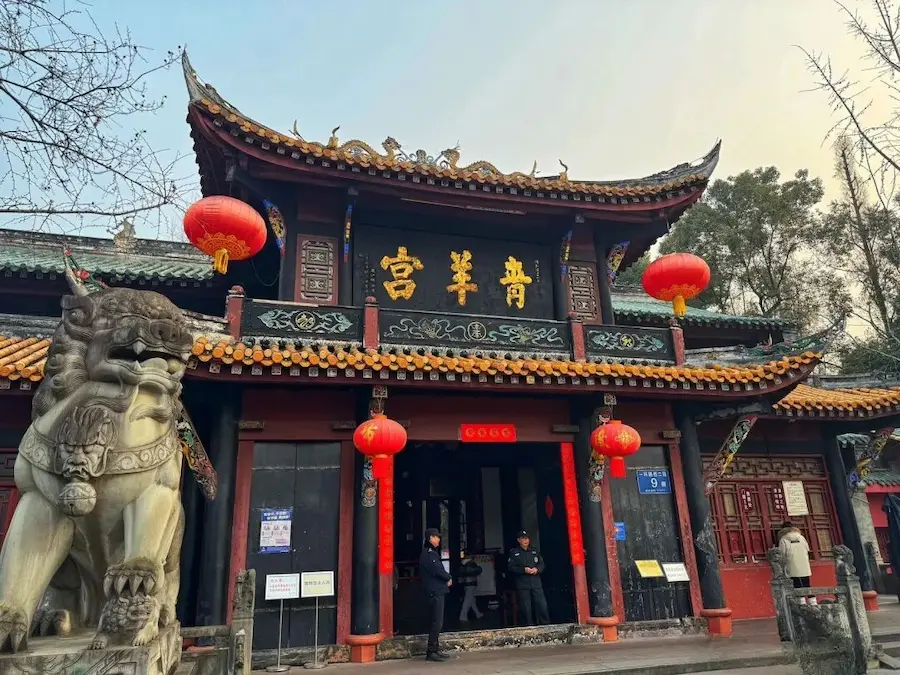
The grand entrance to Qingyang Palace Chengdu sets the tone. Look up: the gold “Qingyang Palace” characters on the black plaque were written by An Hongde, a Qing Dynasty county official—real history right above your head.
Step inside Lingzu Hall. Here you can pick up three free environmental protection incense sticks. Light them, bow, and place them in the burner. No need to buy expensive incense outside—Qingyang Palace Chengdu provides them.
② Hunyuan Hall
Rebuilt in the late Qing Dynasty, this hall at Qingyang Palace Chengdu feels massive. Inside, the main statue shows Taishang Laojun (Laozi deified) holding the “Cosmic Circle”—symbolizing the origin of the universe.
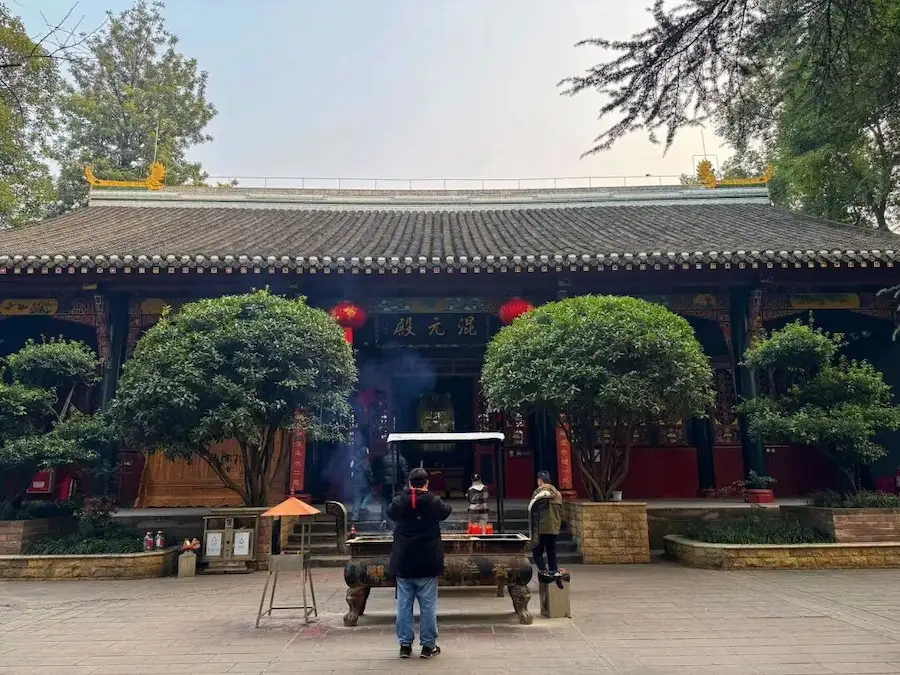
Don’t miss: Look up at the stone columns. Dragons, phoenixes, and playful lions are carved right into the rock—incredible craftsmanship preserved at Qingyang Palace Chengdu.
Behind the main hall, notice the figure here. Her appearance resembles the Buddhist Guanyin—a beautiful example of how China’s religions have influenced each other over centuries at places like Qingyang Palace Chengdu.
③ Bagua Pavilion: The Crown Jewel
This is it—the most photographed spot in Qingyang Palace Chengdu.
Why it’s special:
20 meters high, pure wood-and-stone construction
No nails! Everything held together by traditional mortise and tenon joints
Square base, round top—representing the ancient Chinese belief that “heaven is round, earth is square”
Eight outer columns carved with twisting dragons so lifelike they seem ready to fly off
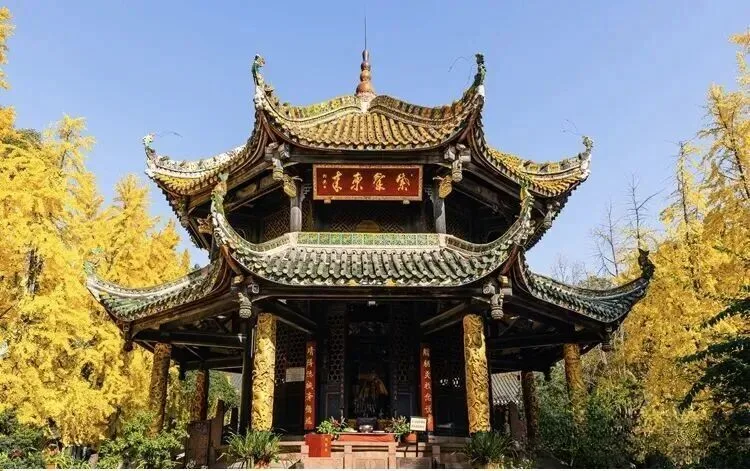
Local legend: They say when workers finished the pavilion at Qingyang Palace Chengdu, one pillar dragon came alive at midnight and tried to escape. A celestial guardian punched it back into the stone. You can still see the fist-shaped dent in that column—find it yourself!
Inside sits Laozi, calmly riding his green ox, watching over Qingyang Palace Chengdu.
④ Sanqing Hall: The Main Sanctuary
This is the heart of Qingyang Palace Chengdu. Originally Tang Dynasty, rebuilt in 1669 during Kangxi’s reign.
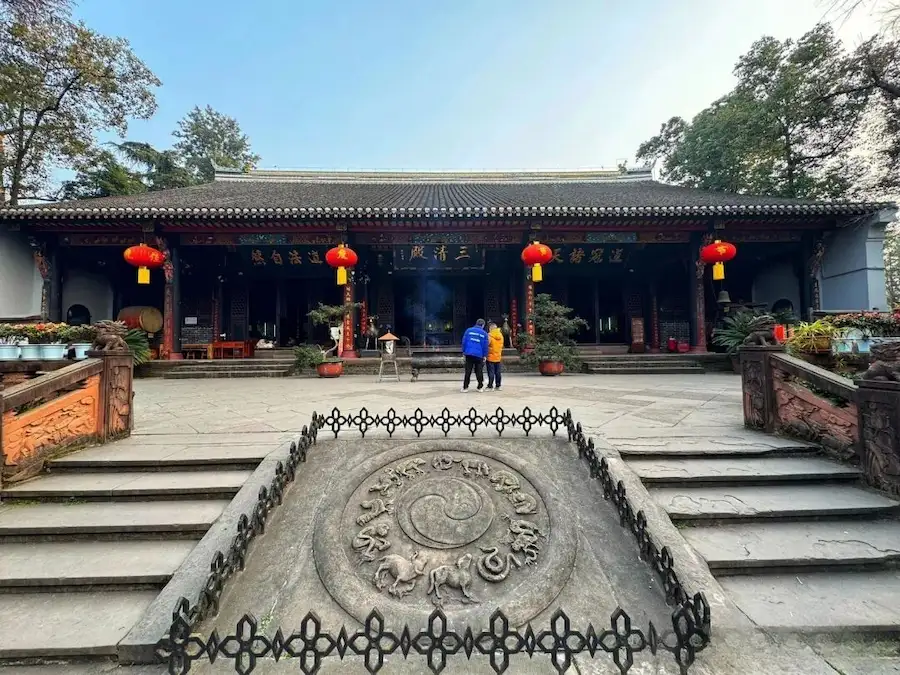
Inside: Three supreme Taoist deities—Yuqing Yuanshi Tianzun, Shangqing Lingbao Tianzun, and Taiqing Daode Tianzun (Laozi himself). Along the walls stand the Twelve Golden Immortals, guardians of Qingyang Palace Chengdu.
The famous bronze goats: Out front, on the incense table—two bronze creatures you absolutely must see at Qingyang Palace Chengdu.
The left goat (one horn): Cast in 1723, bought in Beijing and gifted to Qingyang Palace Chengdu by a high official named Zhang Penghe. This goat is strange and wonderful—it combines 12 zodiac animals: mouse ears, cow nose, tiger paws, rabbit back, dragon horn, snake tail, horse mouth, goat beard, monkey head, chicken eyes, dog belly, pig buttocks. Touch wherever you hurt—locals swear it heals you. That’s why this goat at Qingyang Palace Chengdu shines—millions of hopeful hands have polished it smooth.
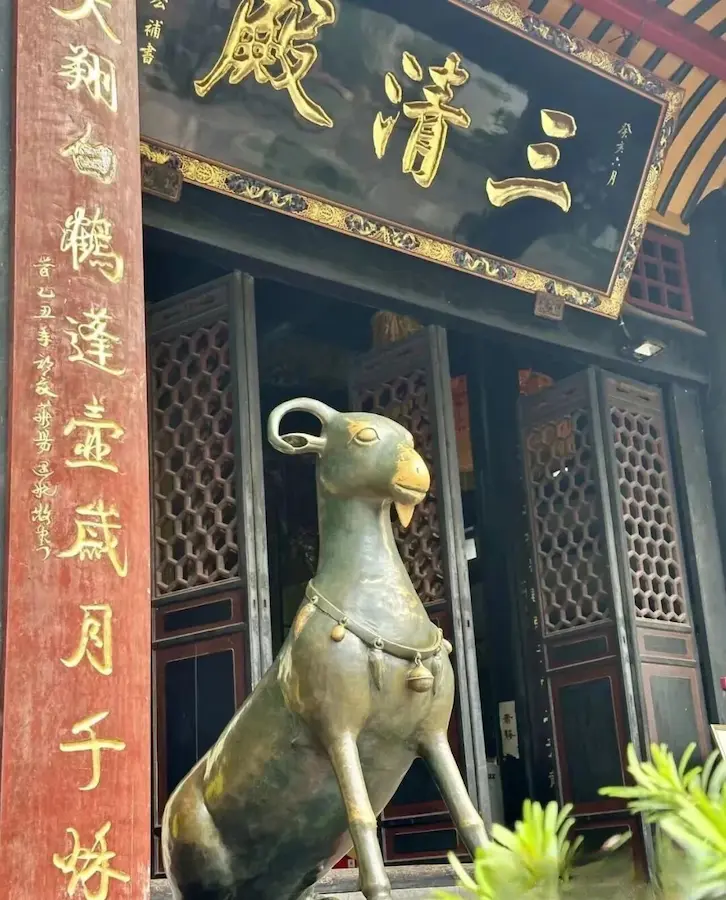
The right goat (two horns): Cast in 1829 by believers who wanted a matching pair for Qingyang Palace Chengdu.
Also inside: a Ming Dynasty bell weighing over 3,000 kilograms, still ringing through Qingyang Palace Chengdu on special occasions.
⑤ Doumu Hall
This is Qingyang Palace Chengdu’s oldest surviving building—pure Ming Dynasty architecture, all wood.
Doumu, the “Mother of the Dipper,” has three eyes and eight arms. She governs the stars and the sixty-year cycle of the zodiac. If you follow Chinese astrology, this hall at Qingyang Palace Chengdu matters.
⑥ The Rear Platforms and Tang King Hall
Three platforms rise at the back of Qingyang Palace Chengdu:
Left: Where Laozi supposedly incarnated
Right: Where Laozi taught
Center: Tang Wang Dian (Tang King Hall)
Rare sight: Tang Wang Dian honors Tang Dynasty emperors—Li Yuan, his wife, and Li Shimin. You almost never see imperial family worship inside Taoist temples. It proves how deeply Qingyang Palace Chengdu was connected to the Tang royal house.
Experiences: What to Do at Qingyang Palace Chengdu
Rub the Goats for Good Fortune
Join the line at Sanqing Hall inside Qingyang Palace Chengdu. Locals patiently wait their turn. Touch the goat where your body aches, then touch yourself. Whether you believe or not, it’s a sweet ritual—and watching elderly local women smile as they rub the goat’s nose is heartwarming at Qingyang Palace Chengdu.
Tea Time at Qingyang Tea Garden
After the incense and crowds, head to the backyard tea garden at Qingyang Palace Chengdu. This is the city at its most authentic.
Order a covered bowl of tea—try Bitan Piaoxue or Mengding Ganlu (both famous local greens). Cost: ¥15-30 ($2-4 USD) . Settle into a bamboo chair. Watch old men play cards, ladies knit, and friends argue good-naturedly about politics.
Time slows down here at Qingyang Palace Chengdu. The Taoist principle of effortlessness suddenly makes sense. For more evening relaxation ideas, browse things to do in chengdu at night.
Draw a Fortune Stick
At Doumu Hall or Yuhuang Hall inside Qingyang Palace Chengdu, you can shake a bamboo container until one stick falls out. The number on your stick corresponds to a fortune slip. Cost: around ¥20 ($2.80 USD) . Taoist priests at Qingyang Palace Chengdu can explain your fortune—approach them with an open mind and a smile.
Copy the Scriptures
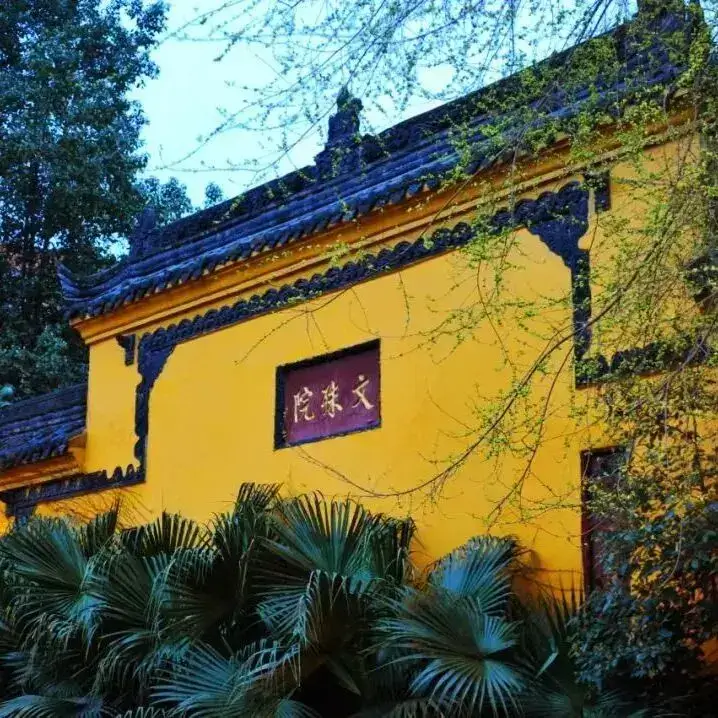
In the academy or tea garden area at Qingyang Palace Chengdu, you might find tables set up for scripture copying. For a small donation (around ¥10/$1.40 USD ), you get paper, brush, and a model text—usually the Scripture of Purity and Tranquility. Tracing those ancient characters, brush in hand, is surprisingly meditative, especially within Qingyang Palace Chengdu.
Try Vegetarian Food
The on-site vegetarian canteen at Qingyang Palace Chengdu serves simple lunch: noodles with mushrooms and greens (¥15/$2 USD ) or a set meal with several dishes. Go around 11:30 AM for the freshest options.
Find the “Ginseng Fruit Tree”
Near Sanqing Hall at Qingyang Palace Chengdu stands a 240-year-old camphor tree. Fans of the 1986 Journey to the West TV series might recognize it—this tree at Qingyang Palace Chengdu played the “Ginseng Fruit Tree” in the show! A fun spot for photos.
Join a Free Tour
Daily at 10:00 AM, 1:30 PM, and 3:00 PM, groups gather at the mountain gate of Qingyang Palace Chengdu. Taoist priests or volunteers lead free English tours—great for understanding what you’re actually seeing at Qingyang Palace Chengdu.
Catch a Festival
Every year on Laozi’s birthday (15th day of 2nd lunar month), Qingyang Palace Chengdu hosts a massive temple fair. It overlaps with the adjacent Culture Park’s flower fair—locals, tourists, food stalls, performers, and that incredible festive energy fill Qingyang Palace Chengdu and its surroundings.
Where to Eat: Food Near Qingyang Palace Chengdu
Inside the Temple
Qingyang Tea Garden at Qingyang Palace Chengdu: Tea and simple vegetarian meals. The atmosphere beats the food—but the food’s fine.
Just Outside
Chen Mapo Tofu (Qinghua Road branch): 5 minutes walking from Qingyang Palace Chengdu. The city’s most famous mapo tofu—numbing, spicy, silky. Worth the trip. It’s a perfect example of chengdu famous food.
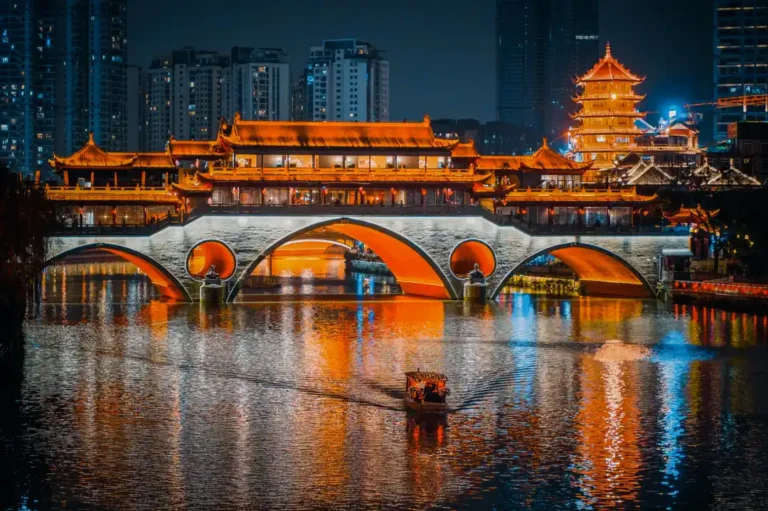
Qintai Road: A short walk from Qingyang Palace Chengdu, this ancient-style street glows with lanterns at night. Restaurants here trend upscale—Huangcheng Laoma hotpot, Shizilou for elegant Sichuan food.
Qingyang Dong Yi Lu / Xi’an Bei Lu: Follow the locals from Qingyang Palace Chengdu into these side streets. Tiny shops serve:
Sweet-spicy cold noodles and “sweet water noodles” (don’t let the name fool you—they’re savory with a hint of sugar)
Wontons in chili oil
Most meals near Qingyang Palace Chengdu cost ¥15-30 ($2-4 USD) .
Beyond the Walls: Exploring Around Qingyang Palace Chengdu
Culture Park
Right next to Qingyang Palace Chengdu—literally through a side gate. Quiet walking paths, weekend antique markets at the bridge (go early Saturday or Sunday morning), and during Chinese New Year, spectacular lantern displays.
Sichuan Museum
10-15 minutes walking from Qingyang Palace Chengdu. The biggest museum in Southwest China. Must-sees:
Zhang Daqian’s paintings (he lived here)
Ancient Ba-Shu bronzes
Han Dynasty stone reliefs
Free entry with ID—reserve online in peak season
Huanhuaxi Park
Behind the museum, not far from Qingyang Palace Chengdu, the city’s largest urban forest park. Walk along the river, spot locals practicing tai chi, and enjoy views of Du Fu’s Thatched Cottage in the distance.
Du Fu Thatched Cottage
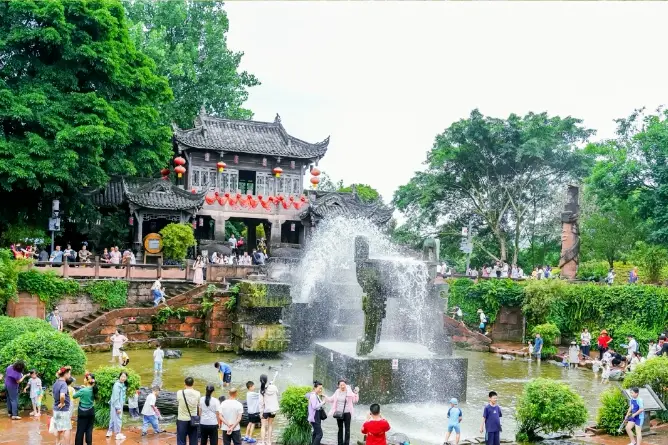
About 2 km from Qingyang Palace Chengdu—10 minutes by taxi or bus. China’s greatest poet lived here briefly. Now it’s a peaceful memorial with winding streams and ancient poetry carved into stone.
Qintai Road
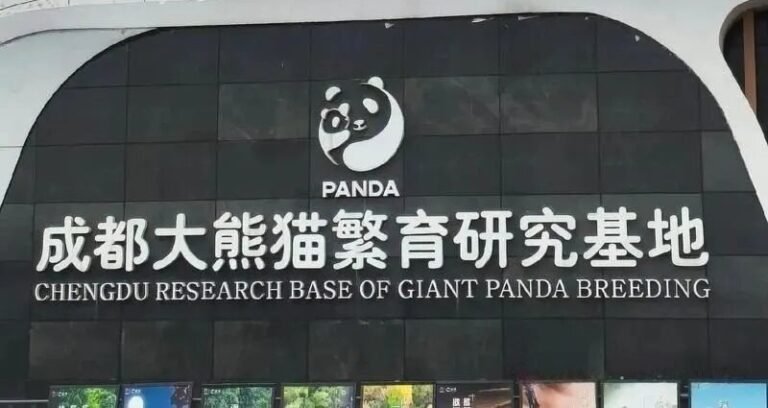
Evening visit recommended near Qingyang Palace Chengdu. This street celebrates the love story of two famous Han Dynasty figures. Elegant architecture, pricey restaurants, and perfect photo ops at dusk. If you’re visiting chengdu research base of giant panda breeding in china, consider pairing it with a trip to Qingyang Palace Chengdu for a balanced day.
Getting to Qingyang Palace Chengdu
Metro (Best Option)
Line 5: Get off at Qingyang Palace Station. Exits B, C, or D—you’ll see Qingyang Palace Chengdu within 2-3 minutes
Lines 2 or 4: Get off at TCM Hospital Station. Exit B, walk south about 10 minutes to reach Qingyang Palace Chengdu
Bus
Dozens of lines stop at the station: 11, 19, 27, 34, 42, 58, 59, 82, 151, and more—all dropping you near Qingyang Palace Chengdu.
Taxi / Ride-hail
Show the driver the characters for Qingyang Palace Chengdu. From city center, about 15-20 minutes depending on traffic—roughly ¥20-30 ($3-4 USD) .
Car
Parking at Qingyang Palace Chengdu is extremely limited. Better to park at Culture Park or a nearby mall lot. Honestly? Take the metro to Qingyang Palace Chengdu.
Where to Stay
For old local atmosphere, stay near Qingyang Palace Chengdu. A highly-rated option:
Courtyard Hotel near Qingyang Palace Chengdu: Traditional courtyard style, about ¥328 ($45 USD) with breakfast. Quiet, charming, close to everything near Qingyang Palace Chengdu.
For shopping convenience, choose Chunxi Road, Tianfu Square, or anywhere along Metro Lines 2 or 5 for easy access to Qingyang Palace Chengdu.
Sample Itineraries
Half-Day Culture Walk (3-4 hours)
9:00 AM – Qingyang Palace Chengdu (visit halls, rub goats, browse)
11:00 AM – Walk to Sichuan Museum (1.5-2 hours)
12:30 PM – Lunch at Chen Mapo Tofu near Qingyang Palace Chengdu
Or afternoon option:
2:00 PM – Qingyang Palace Chengdu (take your time, tea garden break)
4:00 PM – Stroll Culture Park next to Qingyang Palace Chengdu
5:30 PM – Dinner on Qintai Road near Qingyang Palace Chengdu, watch lanterns light up
Full-Day Options
Ancient Theme:
Morning: Qingyang Palace Chengdu → Late morning: Sichuan Museum → Afternoon: Du Fu Thatched Cottage → Late afternoon: Huanhuaxi Park walk → Evening: Dinner near Qingyang Palace Chengdu
Pandas + Culture Combo:
Early morning: Panda Base (go before 10 AM to see active pandas) → Early afternoon: Qingyang Palace Chengdu (rest those legs in tea garden) → Evening: Kuanzhai Alley or Jinli for snacks and souvenirs
Visitor Tips: Doing It Right
Taoist Etiquette at Qingyang Palace Chengdu
No photos inside halls at Qingyang Palace Chengdu—respect the sacred space
Don’t step on thresholds (the high wooden door bottom) at Qingyang Palace Chengdu; step over them
Hold incense in your left hand (left is considered pure in Taoism) at Qingyang Palace Chengdu
Insert incense sticks: center, right, left at Qingyang Palace Chengdu
Dress modestly at Qingyang Palace Chengdu—cover shoulders and knees; no slippers or bare feet
Speak softly at Qingyang Palace Chengdu; many people come to pray, not chat
Avoid Tourist Traps Near Qingyang Palace Chengdu
Outside the gate of Qingyang Palace Chengdu, people may approach offering fortune-telling or “special” guided tours. Smile, shake your head, walk past. Inside Qingyang Palace Chengdu, legitimate Taoist priests wear traditional robes and never hawk services aggressively.
Photography Tips for Qingyang Palace Chengdu
Bagua Pavilion at Qingyang Palace Chengdu: Late afternoon light creates dramatic shadows and silhouettes
Ginkgo season (November) at Qingyang Palace Chengdu: Yellow leaves + red walls = photography heaven
Empty courtyards at Qingyang Palace Chengdu: Arrive right when gates open at 8:00 AM—you’ll have the place nearly to yourself
Forbidden at Qingyang Palace Chengdu: Flashes inside halls, pointing cameras at praying individuals
Practicalities at Qingyang Palace Chengdu
Free eco-incense provided at Qingyang Palace Chengdu—no need to buy outside
Water dispenser near the right side of the entrance to Qingyang Palace Chengdu—bring a bottle
Bring small bills/coins (¥20 or less) if you plan to draw fortunes at Qingyang Palace Chengdu
The city’s romance isn’t just about spicy hotpot and chubby pandas. It’s also about places like Qingyang Palace Chengdu—where ancient cypress trees shade quiet courtyards, where the scent of incense mingles with jasmine tea, and where 2,500 years of history whisper through carved dragon pillars. Come spend a morning at Qingyang Palace Chengdu. Touch the goat. Drink the tea. Let the city’s spiritual heart remind you to slow down, breathe deep, and simply be.
Your visit to Qingyang Palace Chengdu starts at Exit C, Line 5. The palace is waiting.