Chengdu Tea Houses: The Ultimate Guide to Best Teahouses, Tea Culture & Local Life
No trip to this city feels real until you’ve spent a lazy afternoon inside a chengdu tea house. You walk in, pick a bamboo chair that creaks under you, and a stranger might just slide a bowl of tea your way. The air smells faintly of jasmine, old wood, and coal. This isn’t a tourist show — it’s how Chengdu has been living for hundreds of years. Locals like to say, “The teahouse is a small Chengdu; Chengdu is a giant teahouse.” And honestly, after a couple of hours here, that makes perfect sense.
- Why People Spend Whole Days in a Chengdu Teahouse
- Best Tea Houses in Chengdu: Where to Find the Real Thing
- Heming Tea House — The Century-Old Landmark in People’s Park
- Guanyinge Old Tea House — A Living Fossil with a Dirt Floor
- Daci Temple Tea House — Ancient Temple Tea in the Middle of Taikoo Li
- Chenjin Tea House — The Most Photogenic Open-Air Spot
- Yuelai Tea Garden — The Real Sichuan Opera Hideout
- More Chengdu Tea Houses Worth Your Time
- What to Drink and How to Behave
- Weaving Tea Houses Into Your Chengdu Trip
- Frequently Asked Questions
Why People Spend Whole Days in a Chengdu Teahouse
Chengdu local life runs on tea the way other cities run on coffee. Walk through any park, any alley, any riverside, and you’ll see people doing nothing more urgent than drinking tea, cracking sunflower seeds, and chatting. This is called “ba dama cha”— outdoor tea drinking in a casual, open-air space. It’s not about ceremony or formality. It’s about sitting down and letting time pass.
A Different Way to Drink Tea
In many parts of China, tea drinking is delicate and refined. Here, it’s gloriously unfussy. A basic cup of jasmine tea costs around 10-30 CNY (about USD 1.5–4), and once you buy it, hot water refills are free all day. The furniture is simple bamboo and wood, often with a history of its own. No one rushes you. The tea cools, you add more hot water, and the conversation flows on.
The Three Icons of Every Chengdu Teahouse
Three things define the physical experience of a chengdu tea house:
Bamboo chairs — Sichuan grows plenty of bamboo, so locals turn it into high-backed chairs with sloping armrests. They’re cool in summer, light, and make that famous creak when you settle in.
Gaiwan — the three-piece tea set — The gaiwan tea chengdu style uses a bowl, a lid, and a saucer. This trio is called the “three-talent bowl,” representing heaven, earth, and humanity in harmony. Hold the saucer with your left hand, lift the lid with your right, gently stir the leaves, and sip.
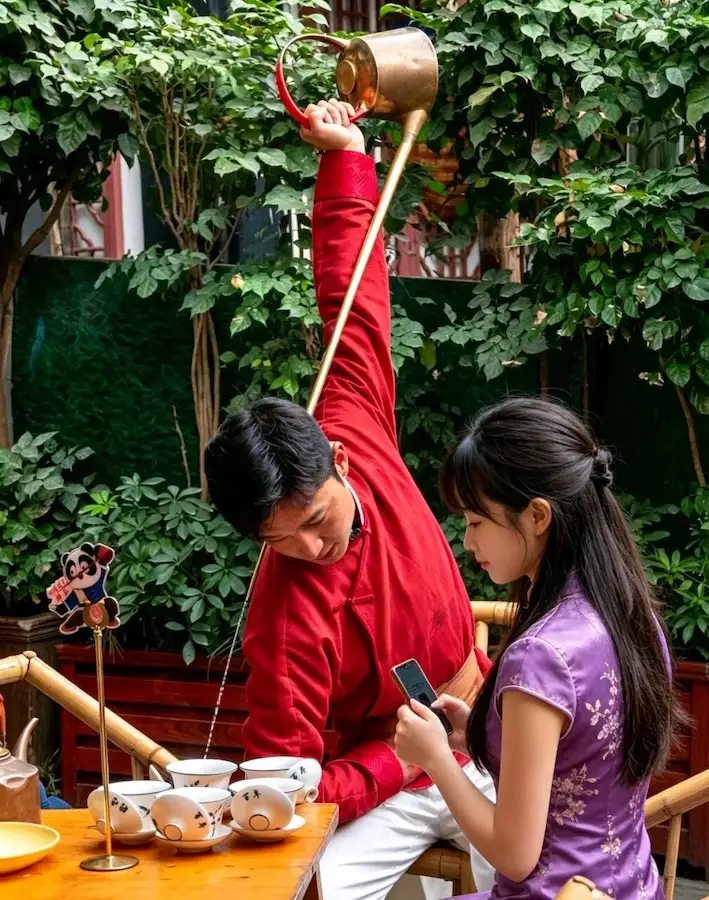
Long-spout copper kettle — Tea masters wield a copper kettle with a spout over a meter long. They pour steaming water from a distance with perfect aim, never spilling a drop. This skill is part of the chengdu tea ceremony, sometimes referred to as “chadao,” and the performance is known as “Dragon’s 18 Moves.”
Ear Cleaning and the Art of Chatting
As you sip, you’ll hear a metallic clicking sound moving between tables. That’s an ear-cleaning master, or “shu er lang.” For around 30-100 CNY (USD 4–14), they’ll clean and massage your ears while you sit back. It’s a signature chengdu local life experience — strange, ticklish, and incredibly relaxing.
All around you, people are playing mahjong, laughing, debating politics, or doing absolutely nothing. This endless chatting is called “bai long men zhen” — literally, “setting up a dragon gate formation” — an old term for gathering and storytelling. It’s the sound a chengdu teahouse makes when it’s truly alive.
Best Tea Houses in Chengdu: Where to Find the Real Thing
You can find a teahouse on almost every street, but some are truly special. These are the best tea houses in chengdu, picked for their history, atmosphere, and unforgettable character.
Heming Tea House — The Century-Old Landmark in People’s Park
If you visit only one chengdu tea house, make it this one. Heming Tea House opened in 1923 inside the People’s Park Chengdu, and it still holds the title of the city’s most famous tea spot. Locals simply call it the People’s Park tea house. Over a thousand square meters of shaded tables spill out beside a lake. Grab a seat, order a cup of handcrafted Maofeng tea (18 CNY / USD 2.5) or jasmine tea (20 CNY / USD 3), and you can stay all day.
The tea house puts on free Sichuan opera snippets every Saturday at 2pm — face-changing, fire-spitting — all right above the teacups. On winter days, people gather around small stoves to boil tea. On summer nights, they serve iced tea. This is chengdu local life at its most generous.
- Address: Inside People’s Park, Qingyang District
- Metro: Line 2, People’s Park Station, Exit B (5-minute walk)
- Hours: 08:00 – 22:00
- Cost: Tea 18–35 CNY (USD 2.5–5), free refills; ear cleaning 30–100 CNY (USD 4–14)
- Local tip: For the best lakeside seat, come before 9am or after 4pm. Avoid national holidays if possible.
Guanyinge Old Tea House — A Living Fossil with a Dirt Floor
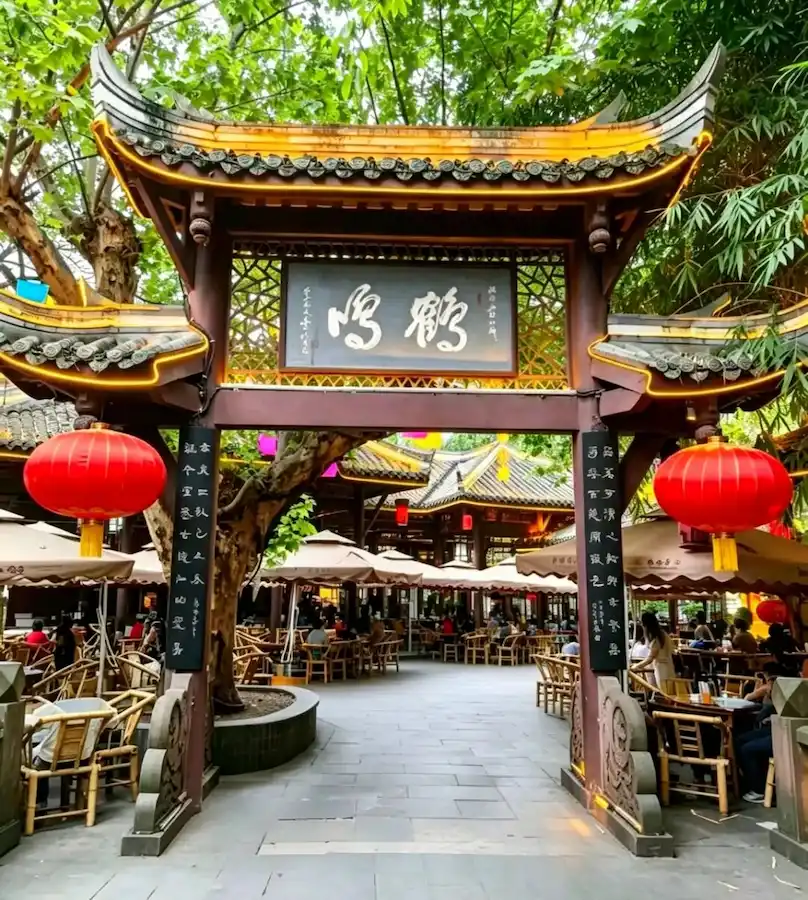
Tucked away in Pengzhen, a small town in Shuangliu district, this is the oldest operating chengdu teahouse you can still visit. Guanyinge was originally a temple in the Qing dynasty and later became a tea house. It keeps its traditional “tiger stove” burning coal all day. The floor is packed earth, polished uneven by decades of footsteps and tea spills — locals call it “thousand-foot mud.”
Elderly regulars show up as early as 4am, pay only 1 CNY for their jasmine tea, and sit in their usual spots. Tourists pay 10 CNY (USD 1.5). The owner, Li Qiang, refuses to raise prices for old neighbors and lets small vendors sell pipes, malt candy, and ear-cleaning services inside. It feels less like a business and more like a big, dusty living room.
- Address: 23-1 Mashiba Street, Pengzhen, Shuangliu District
- How to get there: 40 minutes by taxi from downtown; or Metro Line 3 to Dongsheng, then bus S03 to Pengzhen Changkou
- Hours: 05:00 – 18:00
- Cost: 10 CNY (USD 1.5) for visitors; 1 CNY for local elders; photography without tea 10 CNY
- Photo tip: The light is magic between 9am and 11am, when sunbeams hit the stove steam through old windows.
Daci Temple Tea House — Ancient Temple Tea in the Middle of Taikoo Li
Right in Chengdu’s most modern shopping district, Taikoo Li Chengdu, stands a thousand-year-old Buddhist temple. Inside its walls, Daci Temple Tea House offers a silent, tree-shaded courtyard where you can drink tea (30–80 CNY / USD 4–11) to the sound of chanting and birdsong. The contrast is sharp: one gate separates high-fashion boutiques from the scent of incense and jasmine. It’s a profound chengdu local life experience — peace without leaving the city.
- Address: Inside Daci Temple, 8 Zhongshamao Street, Jinjiang District
- Metro: Line 2, Chunxi Road Station, 10-minute walk
- Hours: 08:00 – 18:30
- Tip: No smoking, no loud games. Perfect for a quiet rest.
Chenjin Tea House — The Most Photogenic Open-Air Spot
Chenjin Tea House in Tiexiangsi Water Street was founded by a photographer, and you can tell. A wooden stage, a giant old tree, and rows of bamboo and rattan chairs fill the courtyard. There are no umbrellas blocking the view, just warm yellow lights and the scent of tea. Young people take photos, and older folks nap in the sun. It’s an ideal place to understand why chengdu teahouse culture is so visually charming.
- Address: Tiexiangsi Water Street, 699 Tianfu 1st Street, Wuhou District
- Metro: Line 5, Jincheng Lake Station, Exit C, 15-minute walk
- Hours: 10:00 – 22:00 (spring/winter), 09:00 – 23:00 (summer/autumn)
- Cost: Tea from 18 CNY (USD 2.5); ear cleaning around 45 CNY (USD 6)
Yuelai Tea Garden — The Real Sichuan Opera Hideout
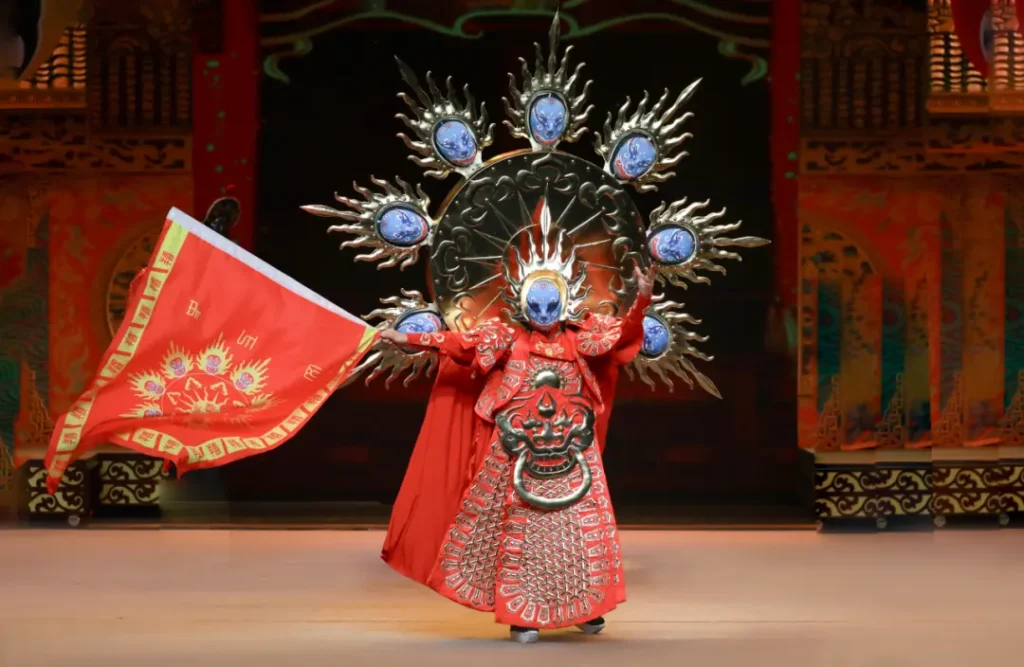
Many places sell flashy “sichuan opera chengdu” shows aimed at tourists. Yuelai Tea Garden is the authentic alternative. Founded in 1909, it was once the guild hall of Sichuan’s drama industry. Every Saturday afternoon, professional actors from the Chengdu Sichuan Opera Research Institute perform right on the old wooden stage. Tickets cost 30–50 CNY (USD 4–7), and a cup of tea is just 12–25 CNY (USD 1.5–3.5). The crowd is mostly local. The performance is genuine. It’s also one of the best ways to dip into chengdu nightlife with a cultural twist, as evening shows are common and the atmosphere is warm and unpretentious.
- Address: 2nd Floor, 54 Huaxingzheng Street, Jinjiang District (behind Wangfujing Department Store)
- Metro: Line 2, Chunxi Road Station, 10-minute walk
- Hours: 11:00 – 23:00 (opera on Saturday afternoons)
- Tip: Arrive early on Saturday to grab a good seat.
More Chengdu Tea Houses Worth Your Time
Da Qi Tea House — A former lacquerware factory transformed into a stylish tea house. Watch face-changing, try DIY lacquer crafts, and eat local snacks. Tea from 30 CNY (USD 4).
Jinqin Old Tea House — A Qing-style wooden building serving the surrounding neighborhood. Outdoor workers drink here for free. Tea from 18 CNY (USD 2.5).
Wangjianglou Park Tea House — Set along the Jinjiang River in a bamboo forest, near a Tang dynasty poet’s memorial. Tea from 20 CNY (USD 3).
Shunxing Old Tea House — An all-in-one spot for gaiwan tea, Sichuan food, and a polished Sichuan opera show in the evening. Around 148 CNY (USD 20).
What to Drink and How to Behave
What to Drink in Chengdu Tea House
Most chengdu teahouses keep it simple. Jasmine flower tea is the all-time favorite — fragrant, affordable, and endlessly refillable. If you want something a little greener, try “bamboo leaf green” (zhu ye qing) or “snowflake drifting on jade” (bi tan piao xue), a jasmine tea with whole blossoms that float on the surface. Prices range from 10 CNY to about 35 CNY (USD 1.5–5). If you see a premium tea list with prices above 80 CNY (USD 11), you’re likely in a more upscale, specialized tea house.
Chengdu Tea House Etiquette — The Lid Signals
Chengdu tea house etiquette is mostly common sense, but the gaiwan lid has its own silent language:
Lid tilted on the bowl: “Please refill my water.”
Lid resting face-up on the table: “I’ll be back soon. Keep my seat.”
Lid closed tightly over the bowl, or the whole set turned upside down: “I’m done. You can clear the table.”
When someone pours hot water for you, tap the table lightly with two fingers — a quiet “thank you” borrowed from old Chinese tea rituals.
These signals are still used in historic tea houses like Heming and Guanyinge, and they’re a fun way to connect with the place.
When to Go and What to Pay
Spring and autumn are dreamlike — mild weather, full outdoor seats. Summer works if you find shade or an indoor spot, and iced tea is refreshing. Winter is perfect for huddling around a small tea stove. Whenever the sun comes out in Chengdu, teahouse seats vanish fast. Locals treat sunlight like a treasure, so follow their lead and head out early.
A quick reference for spending:
| Item | CNY | USD (approx.) |
|---|---|---|
| Basic gaiwan tea | 10–30 | 1.5–4 |
| Premium or gongfu tea | 40–150 | 5.5–20 |
| Ear cleaning | 30–100 | 4–14 |
| Sichuan opera ticket | 30–108 | 4–15 |
| Snacks (seeds, nuts) | 10–30 | 1.5–4 |
Weaving Tea Houses Into Your Chengdu Trip
After a slow morning in a chengdu tea house, everything nearby feels closer and softer. Here’s how to blend tea with the rest of your day:
People’s Park & Kuanzhai Alley: Start with Heming Tea House, stroll through the park, then walk 15 minutes to the historic Kuanzhai Alley neighborhood.
Taikoo Li & Chunxi Road: Have tea at Daci Temple, step into Taikoo Li’s designer stores, and if it’s Saturday, head to Yuelai Tea Garden for an evening Sichuan opera.
Tiexiangsi Water Street: An afternoon at Chenjin Tea House, then wander the canal-side shops and cafes.
Pengzhen Half-Day Trip: Dedicate a morning to Guanyinge Old Tea House. Return to the city by lunchtime, refreshed and full of photos.
One perfect day: Pandas in the morning at the Chengdu Panda Base. Back to the city for a gaiwan tea at Heming Tea House or Daci Temple. Evening snacks in Jinli or Kuanzhai Alley — and if you want a sit-down feast, the best restaurants in Chengdu are never far away. End the night with Sichuan opera at Yuelai Tea Garden. It’s an easy, natural way to experience chengdu local life at every hour.
Frequently Asked Questions
Is a chengdu tea house suitable for solo travelers?
Absolutely. Tables are often shared, and you’ll feel more absorbed than isolated. Bring a book or just watch the world go by.
What’s the difference between a teahouse and a tea ceremony space?
A chengdu tea house is casual and social. A dedicated tea ceremony (chadao) space like Chen Lu or Ji Huo focuses on quiet, mindful brewing, often with smaller groups and higher-quality leaves.
Can I see Sichuan opera chengdu performances in a tea house?
Yes. Yuelai Tea Garden offers authentic shows every Saturday, and Heming Tea House has free snippets. Shunxing Old Tea House also stages polished evening performances.
Is chengdu nightlife only about bars and clubs?
Not at all. Many tea houses stay open late. Watching a fiery Sichuan opera in a wooden old teahouse is a memorable night out that has nothing to do with loud music. For more nocturnal inspiration, check out things to do in Chengdu at night.
Why do locals love People’s Park tea house so much?
Because it’s accessible, beautiful, and deeply woven into the city’s social rhythm. Heming Tea House chengdu has been a gathering spot for generations, from retired teachers to young couples.
Some places ask you to hurry. A chengdu teahouse asks nothing of you, except maybe to slide the lid sideways when you need more hot water. Try it. Sit down, pick a tree, order a jasmine tea. Let the afternoon dissolve. You might find that the slowest part of your trip is the one you remember most.
This guide can become your real trip
Instead of spending hours piecing everything together, let me and our team build the perfect Chengdu itinerary for you — complete with panda visits, hot pot dinners, and the best local tea houses.
📋 Plan My Chengdu Trip